Maha Shivaratri: The Great Night of Shiva

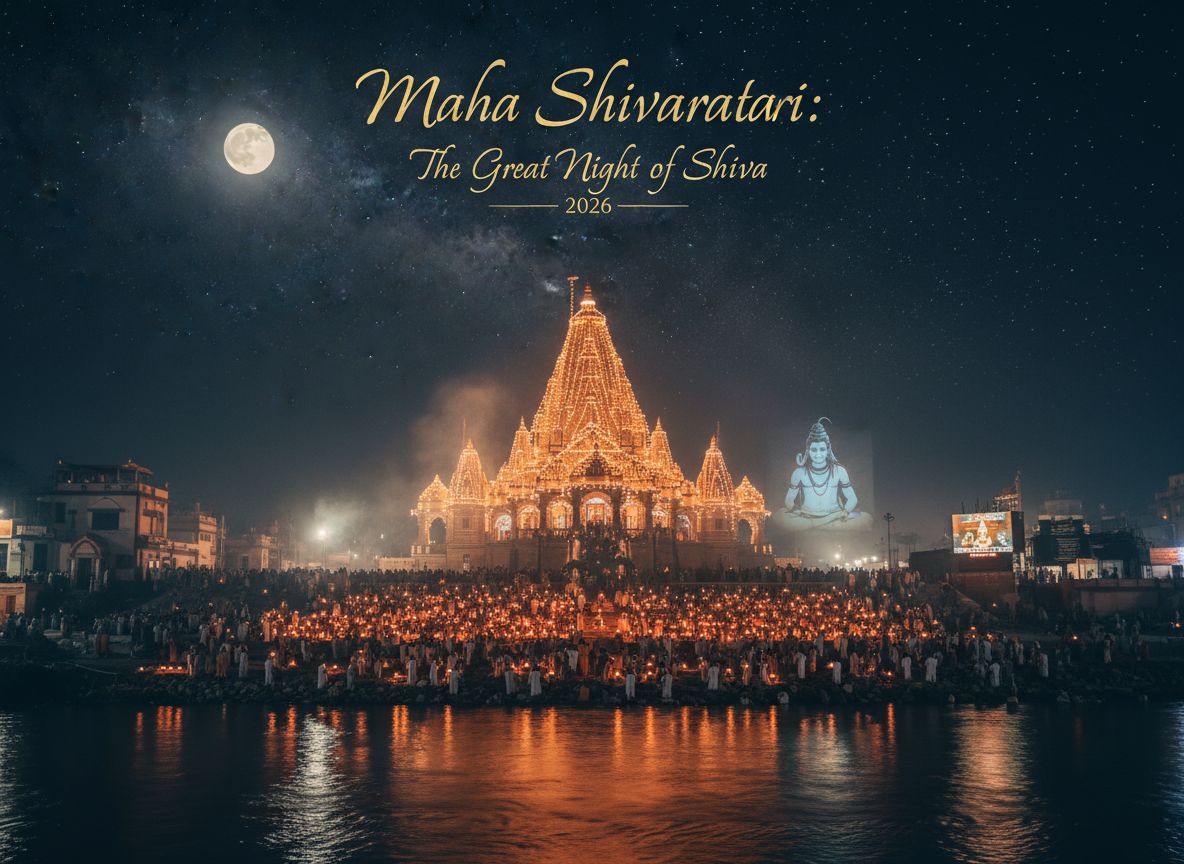
One of the most significant spiritual events of 2026, Maha Shivaratri, falls on February 15, Sunday. Occurring just before the Solar Eclipse, this night carries immense power for spiritual transformation and the removal of deep-seated karmic obstacles. For devotees, the night is divided into four Prahars, each offering specific blessings.
The Nishita Kaal, the most auspicious midnight hour for the main puja, is observed between 12:09 AM and 01:01 AM on the early morning of February 16. T
his is the time when Lord Shiva is believed to have manifested as the infinite pillar of light. Devotees are encouraged to chant “Om Namah Shivaya” or the “Mahamrityunjaya Mantra” to align their internal energy with the cosmic stillness of Mahadev.


The Sound of Liberation: Mahamrityunjaya Mantra

“|| ॐ त्र्यम्बकं यजामहे सुगन्धिं पुष्टिवर्धनम्। उर्वारुकमिव बन्धनान्मृत्योर्मुक्षीय मामृतात्॥”


Meaning: We worship the Three-Eyed One (Shiva), who is fragrant and nourishes all beings. Just as a ripe cucumber is released from its bond to the vine, may he liberate us from death for the sake of immortality.
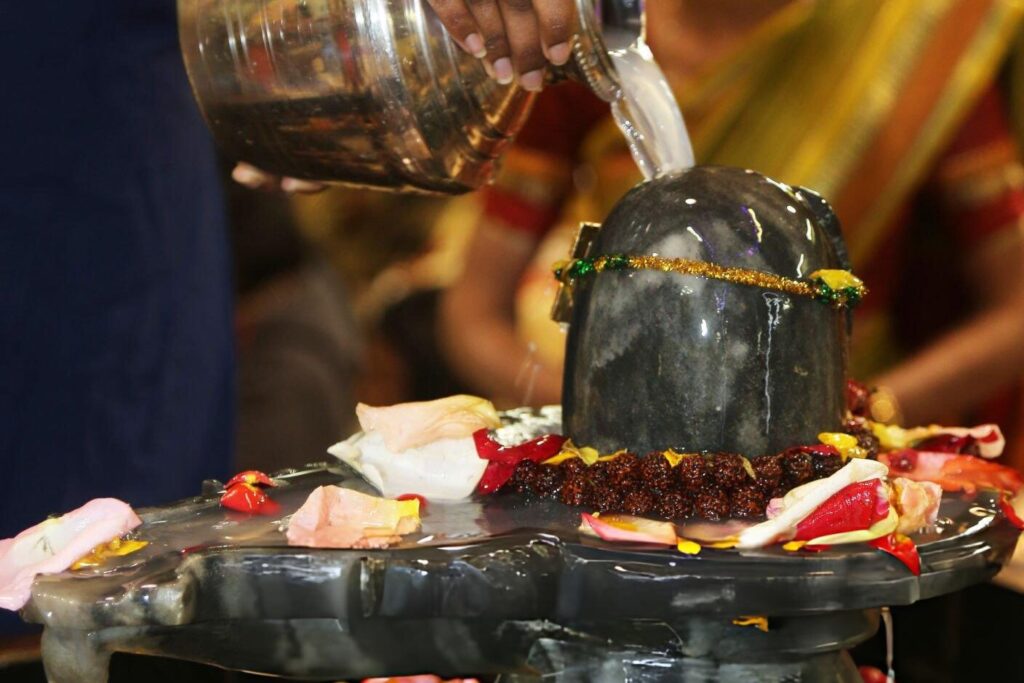
mahashiv ratri first pooja
Prahar (Night Vigil)First Prahar
Time (IST)06:11 PM – 09:23 PM
Spiritual Significance and RitualsAbhishek with pure water and milk; mental purification

The First Prahar: Awakening and Purity

The First Prahar (06:11 PM – 09:23 PM) marks the sacred commencement of the night. Dedicated to the Ishan aspect of Shiva, it symbolizes Srishti (Creation). This phase focuses on the ‘Manas’ (mind)—cleansing the intellect and surrendering one’s ego as the night-long vigil begins.

Step-by-Step Abhishek
1.Prakshalana:
Wash the Shiva Lingam with clean water mixed with Gangajal.
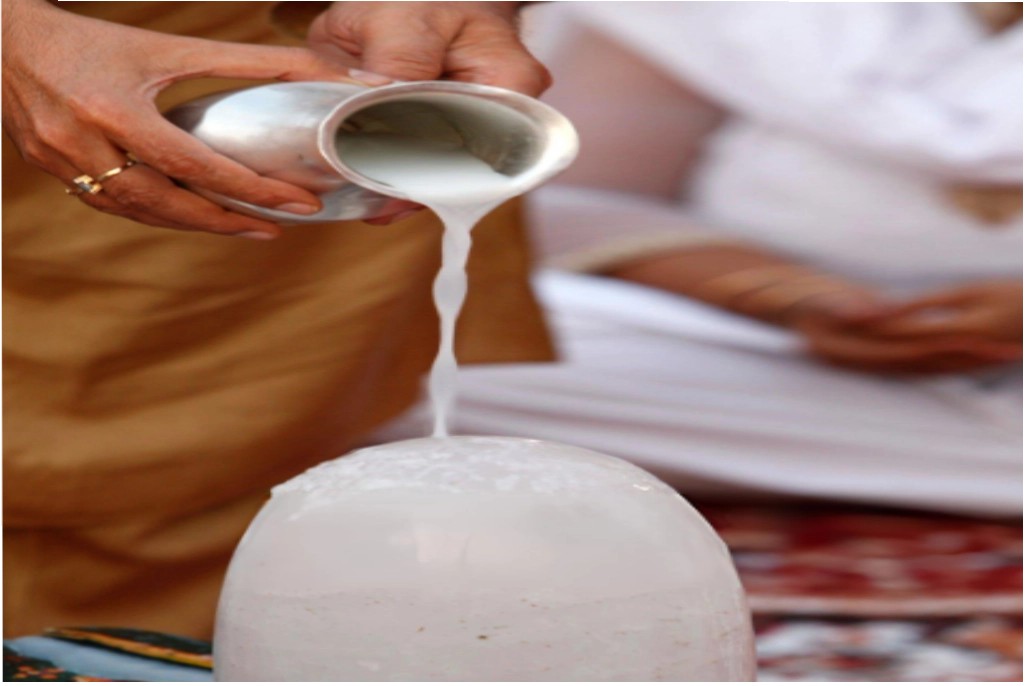
2.Dugdha Abhishek: Pour raw (unboiled) cow’s milk slowly over the Lingam.
3.Shuddhodaka: Rinse again with fresh water.
4.Vastra: Offer a clean piece of cloth or sacred thread (Janeu).
5.Gandha: Apply sandalwood paste (Chandan) in three horizontal lines (Tripundra).

The Cooling of Neelkanth
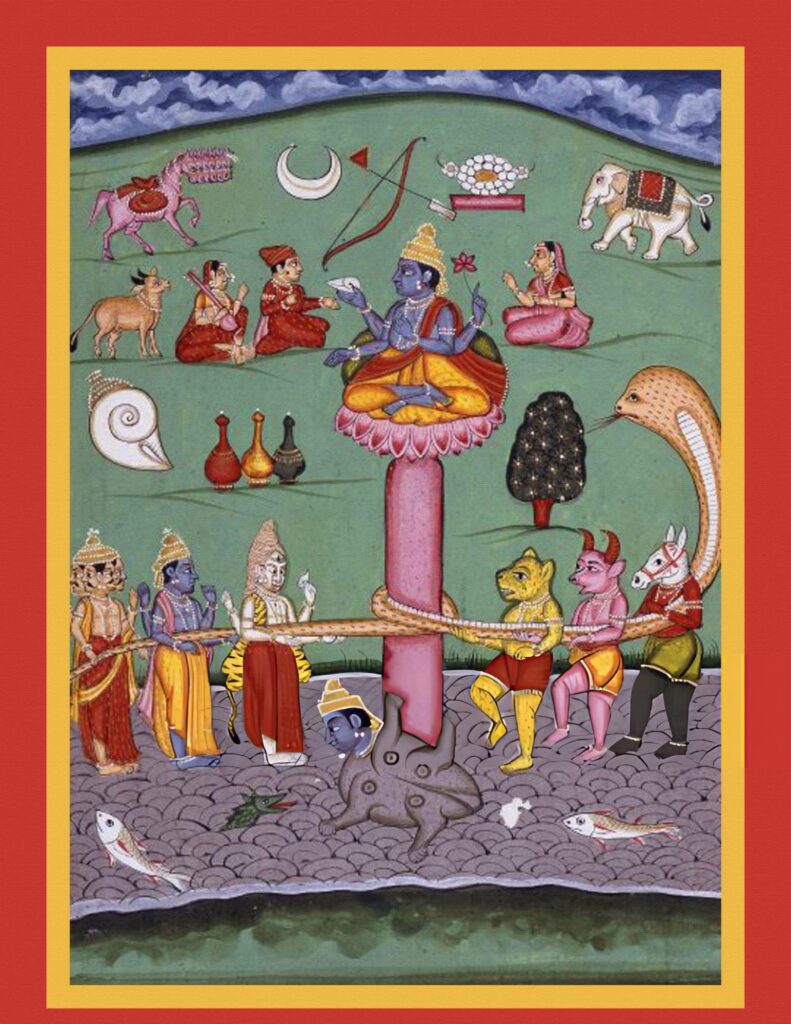
The offering of milk is deeply tied to the legend of Samudra Manthan (The Churning of the Ocean). When Shiva drank the lethal Halahala poison to save the universe, his throat burned with intense heat.Devotees offer milk and water to soothe the ‘Blue-Throated One’. On an internal level, this represents the washing away of mental impurities—anger, greed, and lust—leaving the mind (Manas) as pure and white as the milk itself. By cooling the deity, we aim to cool the turbulence of our own thoughts as the night vigil begins.
Prahar (Night Vigil)Second Prahar
Time (IST)09:23 PM – 12:35 AM
Spiritual Significance and RitualsAbhishek with curd; stability and focus.

The Second Prahar: Stability & Preservation

The Second Prahar (09:23 PM – 12:35 AM) marks the transition into the depth of the night. Dedicated to the Aghora aspect of Shiva and the energy of Sthiti (Preservation), this phase focuses on the Chitta (subconscious mind)—the storehouse of memory and latent impressions. Rituals performed now aim to stabilize the mind and invite prosperity and inner strength.

The Path of Preservation

During this segment, the intensity of devotion peaks. The central act is the Curd Abhishek, where thick, cooling yogurt is offered to the Lord.

Primary Mantra: Om Haum Aghoraya Namah (ॐ हौं अघोराय नमः)

•Focus: As the curd is poured, the devotee seeks to process and stabilize the fluctuations of the subconscious mind.

•Mudra: The Shiva Linga Mudra is often used here to ground spiritual energy and foster inner stability.Step-by-Step Procedure

1.Prakshalana: Clean the Lingam with water mixed with Gangajal to remove previous offerings.

2.Dahi Abhishek: Pour fresh, raw curd slowly over the Lingam while chanting the Aghora mantra.

3.Rinse: Bathe the Lingam again with clean water mixed with sandalwood powder.

4.Deep Daan: Lighting a ghee lamp with five wicks is highly auspicious during this dark phase of the night.
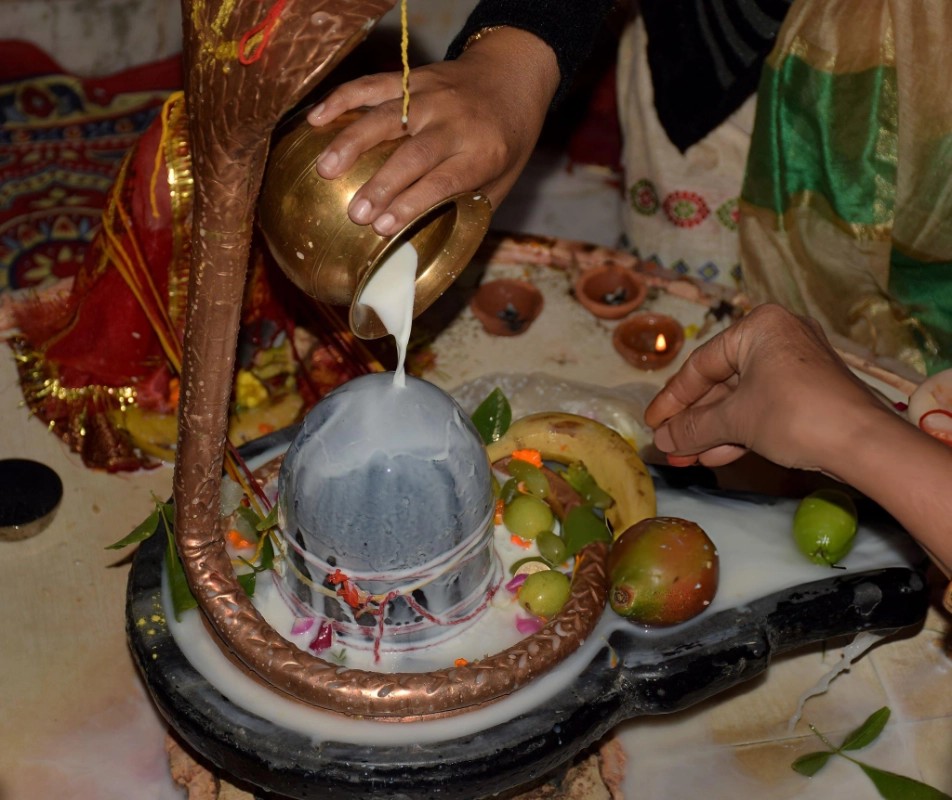

maha shivraty image
Prahar (Night Vigil)Third Prahar
Time (IST)12:35 AM – 03:47 AM
Spiritual Significance and RitualsAbhishek with ghee; spiritual elevation and enlightenment.

The Third Prahar: Peak of Enlightenment

The Third Prahar (12:35 AM – 03:47 AM) is the most auspicious phase of the night. Dedicated to the Vamadeva aspect of Shiva and the energy of Laya (Dissolution), this phase focuses on the Buddhi (higher intellect). As the ‘infinite pillar of light’ manifests, rituals aim for spiritual elevation, enlightenment, and the removal of deep karmic burdens.

The Path to Enlightenment

The Third Prahar marks the peak of meditation. The central ritual is

The Ghee Abhishek Process

where pure clarified butter is poured in a slow, meditative stream to symbolize the purification of the soul’s essence.

•Primary Mantra: Om Haum Vamadevaya Namah (ॐ हौं ईशानाय नमः)

•Focus: Direct your awareness to the space between the eyebrows (Third Eye), visualizing the dissolution of ego.

•Mudra: The Dhyana Mudra is performed during this segment to maintain inner stillness and receptivity to divine grace.The Ghee Abhishek Process

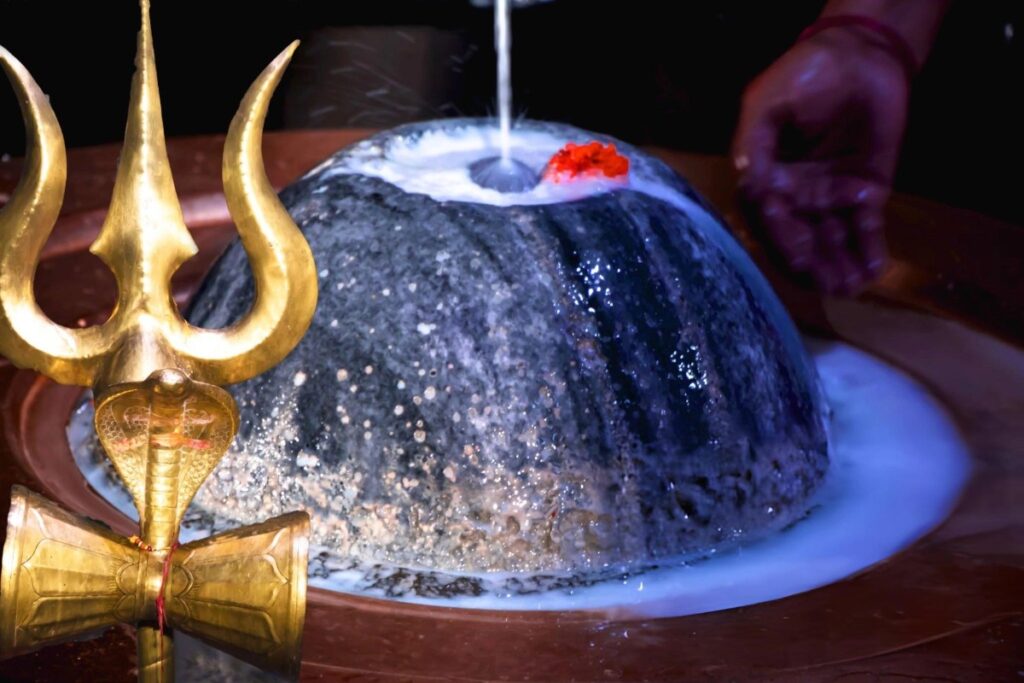
1.Prakshalana: Clear all previous offerings and cleanse the Lingam with water mixed with Gangajal.

2.Ghrita Abhishek: Pour pure, liquid cow ghee while chanting the Vamadeva mantra.

3.Adornment: Offer white flowers and apply Vibhuti (sacred ash) liberally. This phase often features the most elaborate ‘Shringar’.

4.Deep Daan: Lighting a lamp with camphor (Kapur) is essential to signify the burning of ignorance and the light of wisdom.
maha shivratry 2026
Prahar (Night Vigil)Fourth Prahar
Time (IST)03:47 AM – 06:59 AM
Spiritual Significance and RitualsAbhishek with honey; prosperity and divine grace.

The Fourth Prahar: Grace & Liberation

The Fourth Prahar (03:47 AM – 06:59 AM) is the final phase of the night vigil, coinciding with the sacred Brahma Muhurta. Dedicated to the Sadyojata aspect of Shiva and the energy of Anugraha (Grace), this phase represents the attainment of spiritual knowledge and liberation. As the night ends, the focus shifts to surrendering the Ahamkara (ego) to receive the divine blessings of Mahadev.

The Final Hour of the Vigil

The Path of Grace

The final puja is a joyful and grateful conclusion to the night’s penance. The central ritual is the Honey Abhishek, followed by the final morning prayer and the breaking of the fast.

•Primary Mantra: Om Haum Sadyojataya Namah (ॐ हौं सद्योजाताय नमः)

•Final Chant: Om Namah Shivaya (recited with gratitude for the strength to complete the vigil).

•Morning Ritual: Conclude with the Shiva Aarti and the Kshama Prarthana (prayer for forgiveness) for any errors in the rituals.

Step-by-Step Conclusion

1.Honey Abhishek: Pour fresh honey in a slow stream over the Lingam while chanting the Sadyojata mantra.

2.Sugar Offering: Offer sugar or sugarcane juice to represent the sweetness of divine grace.

3.Final Bath: Cleanse the Lingam one last time with pure water and Gangajal.

4.Akshat & Water: Offer unbroken rice grains (Akshat) and water as a final mark of respect.

5.Sunrise Prayer: Welcome the sun with the Surya Namaskar and perform the final Arati.
Aries Horoscope 2026: Personality, Love & Career Compatibility Guide

If you are born between March 21 and April 19 then you are Aries, the first zodiac sign.
They are the parents’ “babies” and bring a raw and child-like energy unlike any other zodiac sign.

In 2026, the “go-getter” attitude of Aries is perhaps more important than ever, as the world moves at a faster pace.
Let’s see what makes the Aries tick.

Aries Personality – Raw & Energetic

Aries is a Mars planet governed sign. This means that if it’s a job to be done an Aries will certainly jump into it – no meeting required.

The “Let’s Do It” Mindset: No inhibitions, no “overthinking,” just action.

Childish Way of Thinking: They are “bindass” and innocent but can be a tad naïve.

Spontaneous: They have lightning reaction mechanism. Always ready to help out when a problem arises.

Aries in the Office: The Natural Leader

When it comes to extracurricular work, Aries is the one who wants to take on the most. The problem is that they tend to bite their

off more than they can chew.Independent
Workers: They believes they can do better on their own and may not request backup.Impatient of teams: Because they move so fast, they may be a little “khadoos” with co-workers who take longer to complete the task.

Reliable: Despite their lack of planning, they are extremely reliable. When they promise to produce results, they will produce results.
Love & Relationships: Pursuing the BalanceYou might believe a fire sign would be an aggressive partner, but Aries is actually very fair. In fact, they desire a “tit-for-tat” approach with equality.A Fair Partner: They desire a 50-50 split. They are your most vocal and fierce advocate and defender.

Compatibility: * Best Match: Other fire signs (Leo and Sagittarius) who can keep up with their fire.

Great Vibe: Air signs (Gemini, Libra, Aquarius) who give them the air to think and breathe.

The Flaw: They may overcompensate. If the other person isn’t putting in the work, the Aries may take on too much and become exhausted.Strengths & Weaknesses at a GlanceStrength(What’s Good)Weakness(What’s Not Good)

Fierce Ally: Will fight for you if bullied.Impatient: “I want it now” attitude.Strong-willed: Won’t quit.

Headstrong: Could be perceived as overbearing.
Quick Fingers: Skilled in crisis.
Lack of Limits: Has a tendency to overcommit.Summary for 2026So in summary, Aries is the match that lights the flame. Whether you’re dealing with a career shift or a new romance this year, remember that your strength is in your bravery. So don’t be shy about taking charge, but maybe be a little more patient with those who can’t keep up with you!

Final Thoughts for 2026

What We Love (Strengths)What’s a Bit Much (Weaknesses)
Fierce Allies: They will literally fight for you.Zero Patience: They want results yesterday.
Strong-Willed: “Impossible” isn’t in their dictionary.Headstrong: Can be a bit controlling at times.
Natural Protectors: They hate bullies.Spreading Thin: They say ‘yes’ to too many things.


Final Thoughts for 2026

In conclusion, Aries is the spark that gets the world moving. Whether you’re looking to switch careers or start a new chapter in your love life this year, your courage is your greatest weapon. Therefore, keep leading the way, but try to remember that not everyone can run as fast as you. A little patience will go a long way in making 2026 your best year yet!

Aries Horoscope 2026,
Aries love compatibility 2026,
Aries career 2026,

Introduction to Palm Reading

Chiromancy (Palm Reading) Definition

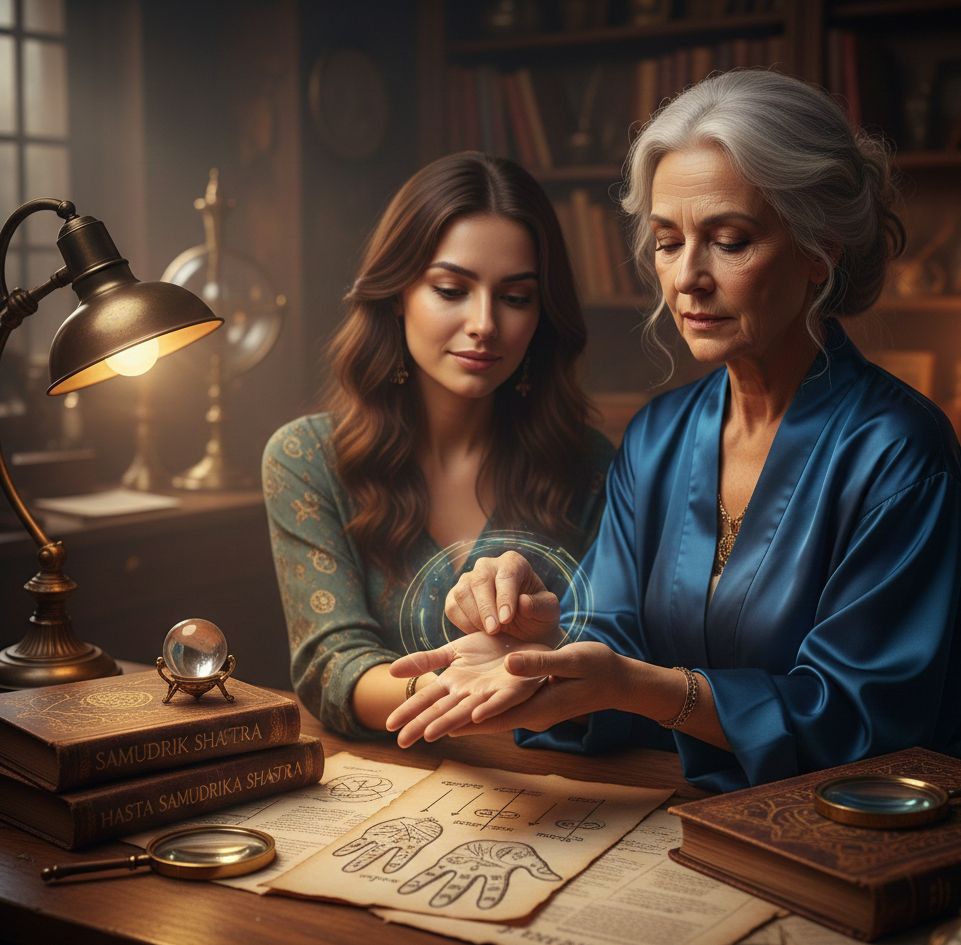
Chiromancy, widely known as palmistry, is the art of analyzing character and fortune by interpreting the features of the hand. This practice involves examining the lines, mounts (bumps), finger shapes, and nails to gain insight into an individual’s personality and potential,. The discipline is actually a sub-section of a vast, ancient field of study known as “Samudrik Shastra,” which translates from Sanskrit as “the ocean of knowledge” and encompasses the interpretation of various body features. Specifically, the study of the hand is referred to as “Hasta Samudrika Shastra”.

While the term chiromancy specifically refers to the study of the lines, the broader practice often incorporates chirognomy, which is the study of the hand’s shape, size, and appearance, as well as dermatoglyphics, the study of skin ridges and fingerprints,,. Fundamentally, palmistry is viewed as a method of personal counseling and self-discovery rather than merely predicting a fixed future,.

Historical Roots

The history of palmistry spans thousands of years, with origins traced back to India and China as early as 3000 to 3110 BCE

Ancient Civilizations:

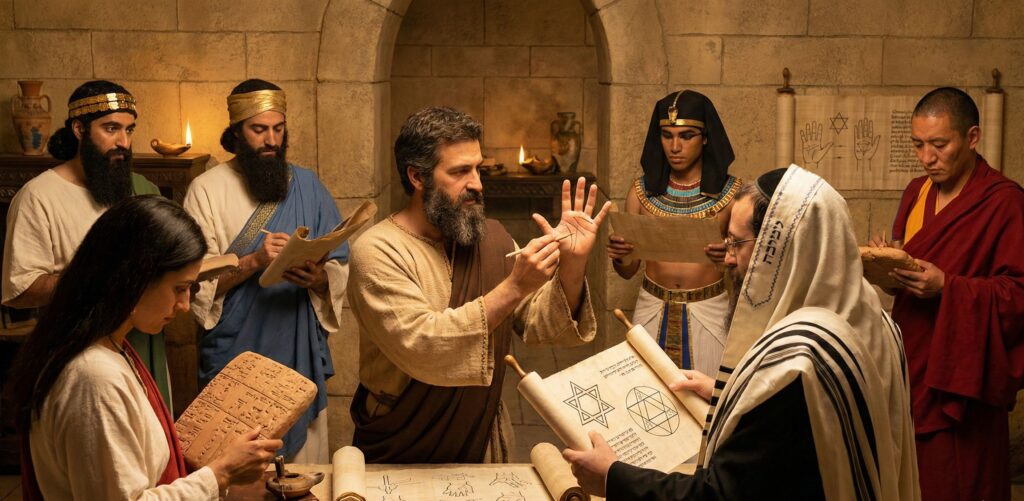
  • The practice captivated many ancient cultures, including the Sumerians, Babylonians, Tibetans, Persians, and Egyptians. In the Judaic sphere, chiromancy appeared in the circle of Merkabah mysticism, serving as a method to determine if a person was fit to receive esoteric teachings,.

Greece and Rome:

  • The practice reached classical Greece by the fourth century BCE. Philosophers such as Anaxagoras regarded it as a study worthy of an educated mind, and Aristotle observed that lines in the hand were associated with the length of life,. In Roman history, legend suggests that Julius Caesar used palmistry to judge his men, though some scholars argue this is a myth and that the Roman ruling class actually preferred astrology,,.

The Middle Ages and Renaissance:

Contrary to the belief that the Church completely banned the practice, many Popes during the Middle Ages studied subjects like astrology and palmistry. The art was reintroduced to Europe during the 12th century, likely by Crusaders returning with manuscripts from the Middle East rather than by Gypsies, who arrived later in the 15th century,. By the Renaissance, palmistry was sufficiently respected to be part of the official curriculum at universities such as Leipzig, Bologna, and Wittenberg,.

Modern Era:

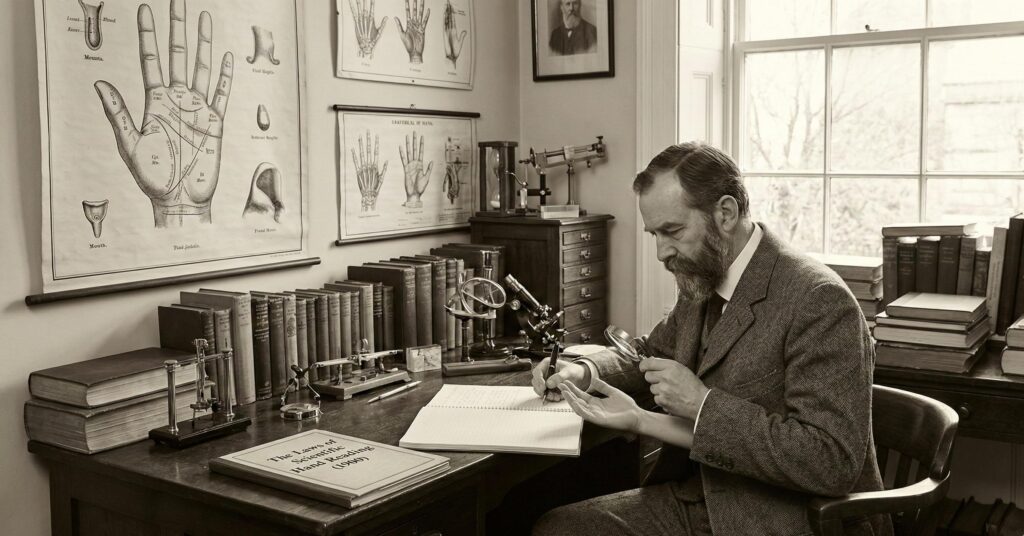
After a decline in the 18th century, the practice saw a revival in the late 19th century, notably through William Benham, who introduced a scientific approach to hand reading in 1900,.

The Concept

The core philosophy of palmistry is that the hand acts as a “map of life” or a “circuit board” for the brain,.

  • Mind-Body Connection: Neurosurgeons have observed that the lines in the palm are created by nerve endings originating in the middle brain. Consequently, both conscious and unconscious thoughts generate bio-electrical impulses that are transmitted to the hands, forming lines over time,. This concept suggests that just as a pebble creates ripples in water, thoughts create effects on the palms.
  • Dynamic Nature: A crucial concept in palmistry is that the lines are not set in stone. Because the lines reflect a person’s attitudes and experiences, they change as the person changes. Therefore, the lines represent potential outcomes rather than an unchangeable fate; if a person alters their thinking or lifestyle, their lines will reflect those new patterns,.
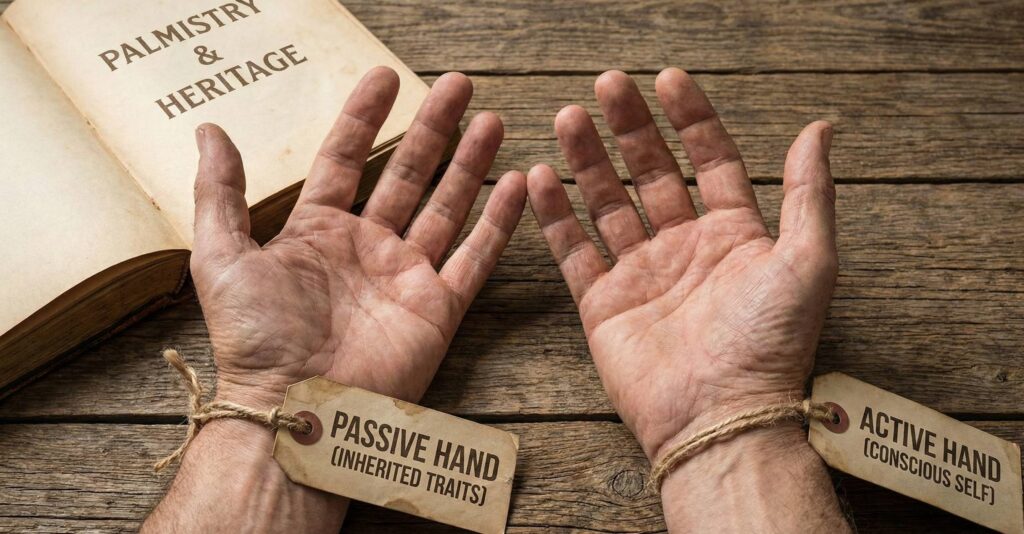
  • Active vs. Passive Hands: Palmistry differentiates between the two hands. The passive hand (usually the left for right-handed people) reveals inherited traits, the subconscious, and the potential one is born with,,. The active hand (usually the right) represents the “hand you make,” reflecting the conscious self, current accomplishments, and how one has utilized their potential,. In some ancient Judaic traditions, however, the right hand was the determining factor for males and the left for females.

Best Lal Kitab Remedies for 2026

Harmonizing Destiny: A Comprehensive Guide to Vedic Remedies and Lal Kitab

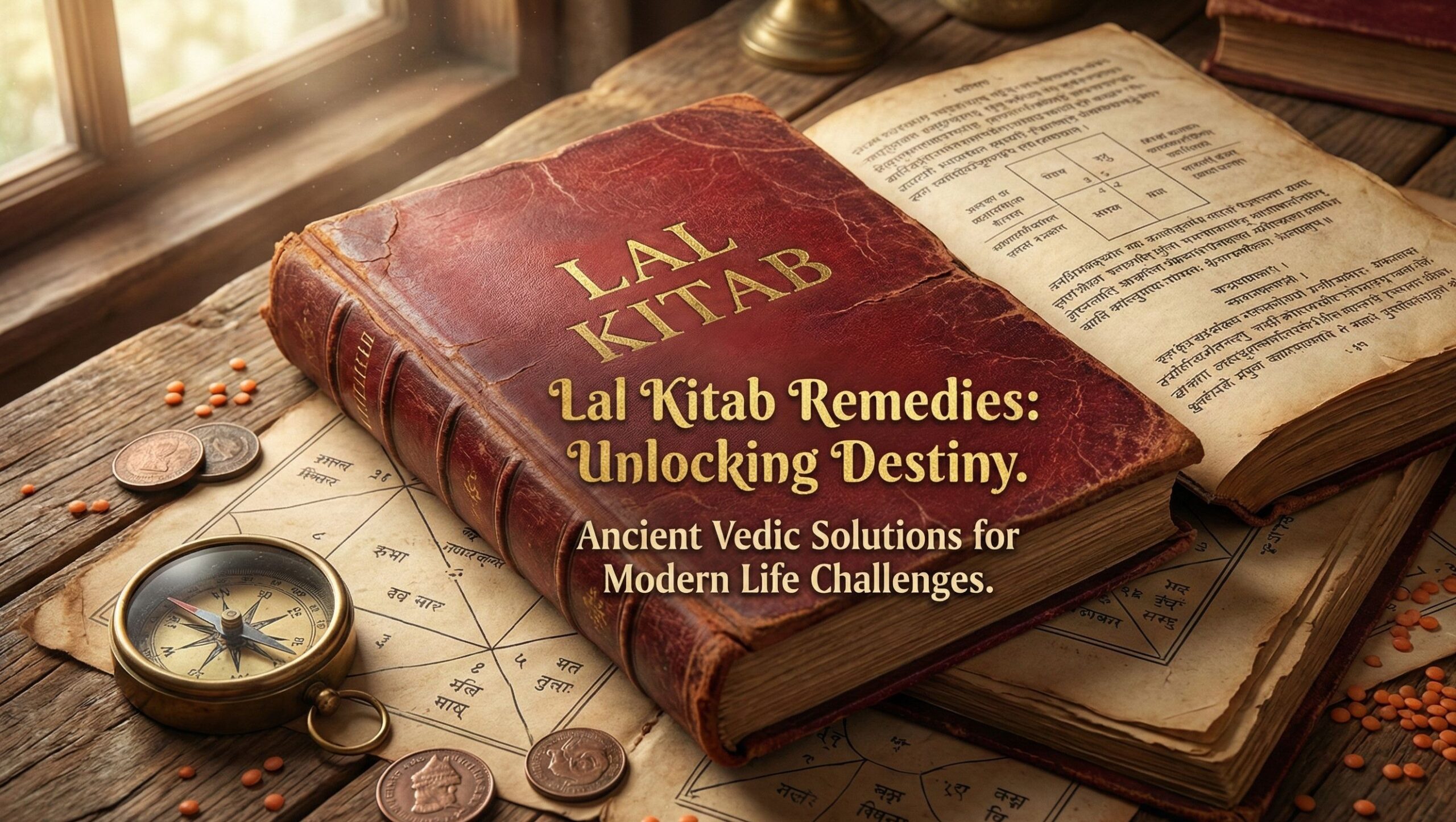
In the vast ocean of Vedic Astrology, the alignment of planets at the time of birth maps out the potential trajectory of a human life. ancient wisdom dictates that destiny is not entirely written in stone. Through the pragmatic and often domestic remedies found in the Lal Kitab (Red Book) and the application of Gemology, one can mitigate negative influences (Doshas) and enhance positive energies.

This guide analyzes specific corrective measures for planetary afflictions, the phenomenon of Kaal Sarp Yog, and the strategic use of gemstones and timing to improve health, wealth, and relationships.

Part 1: Planetary Remedies (Lal Kitab)

Lal Kitab is very simple, easy and inexpensive to use, and it requires some symbolic activities with common materials. The following is a summary of remedies that align the energy of each planet.

The Luminaries and Mars

  • Sun (Surya): Representing the soul and authority. To strengthen a weak Sun, one should eat something sweet and drink water before starting important tasks. Worshipping Lord Vishnu and throwing a copper coin into flowing water are potent remedies.
  • Moon (Chandra): Governing emotions and the mother. To calm the mind, seek blessings by touching your mother’s feet and keep a square piece of silver. If the Moon is afflicted (e.g., in Scorpio), storing water from a cremation ground is a specific Lal Kitab remedy.
  • Mars (Mangal): The planet of energy and siblings. Fasting on Tuesdays and donating vermillion (Sindoor) to Lord Hanuman is essential. Avoid conflicts with brothers and donate red lentils (Masoor Dal) to flowing water.

Mercury, Jupiter, and Venus

  • Mercury (Budha): Ruling intellect and business. Pierce the nose for 100 days or clean teeth with alum (fitkari). Feeding green fodder to cows and donating green bangles to eunuchs helps pacify Mercury.
  • Jupiter (Guru): The teacher and bestower of wealth. Apply saffron (Kesar) to the navel and tongue daily. Watering a Peepal tree for 43 days and showing respect to elders/teachers strengthens Jupiter.
  • Venus (Shukra): Governing luxury and marriage. To enhance Venus, use perfumes and wear clean clothes. Throwing a blue flower into a drain for 43 days is a specific remedy for removing obstacles.

Saturn and the Shadow Planets

  • Saturn (Shani): The judge. Feeding crows and pouring mustard oil on the ground for 43 days are standard remedies. Donating iron and feeding oil-smeared chapatis to dogs appeases Saturn.
  • Rahu (Dragon’s Head): To counter mental unrest and sudden losses, throw barley or coal into flowing water. Eating in the kitchen (near the fire) helps stabilize Rahu.
  • Ketu (Dragon’s Tail): feeding stray dogs—specifically two-colored dogs—is highly recommended. Moreover, donating blankets at a temple helps mitigate Ketu’s stinging effects effectively.

Part 2: Understanding and Curing Kaal Sarp Yog

Kaal Sarp Yog:  is a major astrological condition where all seven physical planets are trapped between Rahu and Ketu. Consequently, it occurs when all seven planets are hemmed between Rahu and Ketu.
Although it is feared for causing delays, it can nevertheless confer immense political power and spiritual depth if channeled correctly.”

Notable Types of Kaal Sarp Yog:

  1. Anant: (Rahu in 1st, Ketu in 7th) Affects marital life but can bring windfalls.
  2. Kulik & Vasuki: (Rahu in 2nd or 3rd) Affects health, finances, and relationships with siblings.
  3. Shankhpal: (Rahu in 4th) Causes stress in the work sphere but can lead to political success.
  4. Ghatak & Vishdhar: Common in legal litigations and instability in residence.

General Remedies:

To neutralize this yoga, one should rely on the worship of Lord Shiva and the snake deities (Nagas). Specific rituals include releasing a pair of snakes (symbolic) or throwing coal into a river. The “Grahan Kaal Sarp Yog” (involving Sun/Moon) is considered most potent and requires specific Shanti Poojas.

Part 3: Gemology – The Science of Stones

Gemstones act as amplifiers for planetary rays. However, they must be worn with caution based on the Ascendant and planetary placements.

GemstonePlanetKey Benefits
Ruby (Manikya)SunIncreases courage, physical vitality, and hemoglobin levels. Good for authority.
Pearl (Moti)MoonCalms the mind, controls anger, and benefits relations with the mother.
Red Coral (Moonga)MarsProvides physical strength, courage, and protects against blood disorders.
Emerald (Panna)MercuryEnhances speech, memory, mathematics, and business acumen.
Yellow Sapphire (Pukhraj)JupiterThe stone of wisdom, marriage, and property. Essential for teachers and lawyers.
Diamond (Heera)VenusAttracts luxury, beauty, and marital bliss. Good for artists and the cosmetics business.
Blue Sapphire (Neelam)SaturnThe fastest-acting stone. Brings sudden wealth and justice but must be tested before wearing.
Hessonite (Gomed)RahuProtects against politics, accidents, and sudden insanity.
Cat’s Eye (Lasaniya)KetuEnhances intuition and protects against hidden enemies or supernatural fears.

Part 4: Practical Solutions for Daily Life

Wealth and Debt Management:

  • To Remove Debt: Plant two banana trees (male and female) in a Vishnu temple. Offer water mixed with 11 red chili seeds to the rising Sun while praying for debt relief.
  • To Stop Money Wastage: Keep two solid silver round pieces in your wallet.
  • Business Growth: Tie 5 Gomati Chakras in a red cloth and hang them at the entrance of the office on a Friday.

Protection (Black Magic & Evil Eye):

  • For Shops: On a Saturday, cut a lemon into two pieces outside the shop; throw one piece to the left and one to the right.
  • For Children: If a child stops eating or acting normally, rotate a handful of sugar anti-clockwise over their head and flush it down the drain.

The Importance of Timing (Rahu Kalam):

Vedic astrology emphasizes starting work at the right time. Rahu Kalam is a period of roughly 90 minutes every day considered inauspicious for new ventures.

  • Mnemonic to remember:“Mother Saw Father Wearing The Turban”
    • Monday (Mother): 7:30 – 9:00 AM
    • Saturday (Saw): 9:00 – 10:30 AM
    • Friday (Father): 10:30 – 12:00 PM
    • Wednesday (Wearing): 12:00 – 1:30 PM
    • Thursday (The): 1:30 – 3:00 PM
    • Tuesday (Turban): 3:00 – 4:30 PM
    • Sunday: 4:30 – 6:00 PM

Lal Kitab: Annual Changes (Varshphal) FAQ

Q1: Does the Lal Kitab horoscope change every year?

Yes. While your main birth chart remains constant, Lal Kitab places significant emphasis on the Annual Chart, known as Varshphal. The predictions and the positioning of the planets change every year based on this system.

Q2: What is the difference between the Birth Chart and the Varshphal?

Lal Kitab distinguishes between the two in the following way:

  • Birth Chart (Janam Kundali): This is the chart created at the exact time of your birth. It is considered the “foundation” or permanent map of your life. It does not change.
  • Annual Chart (Varshphal): This is a new chart created for a specific year, starting from your birthday and ending on your next birthday. In this chart, the planets move to different houses.

Q3: Do the remedies (Upay) remain the same forever?

No. Because the planets shift positions in the Annual Chart (Varshphal), the remedies must change accordingly.

  • A remedy that worked for you last year may not work this year.
  • Lal Kitab strictly advises that remedies are valid only for that specific year (from birthday to birthday).

Q4: Why do the remedies change?

The philosophy is that while your destiny (Birth Chart) is fixed, the time (Varshphal) is constantly moving. As the influence of the planets shifts year by year, the method to correct or appease them must also shift.

Janam Kundli Kya Hai?

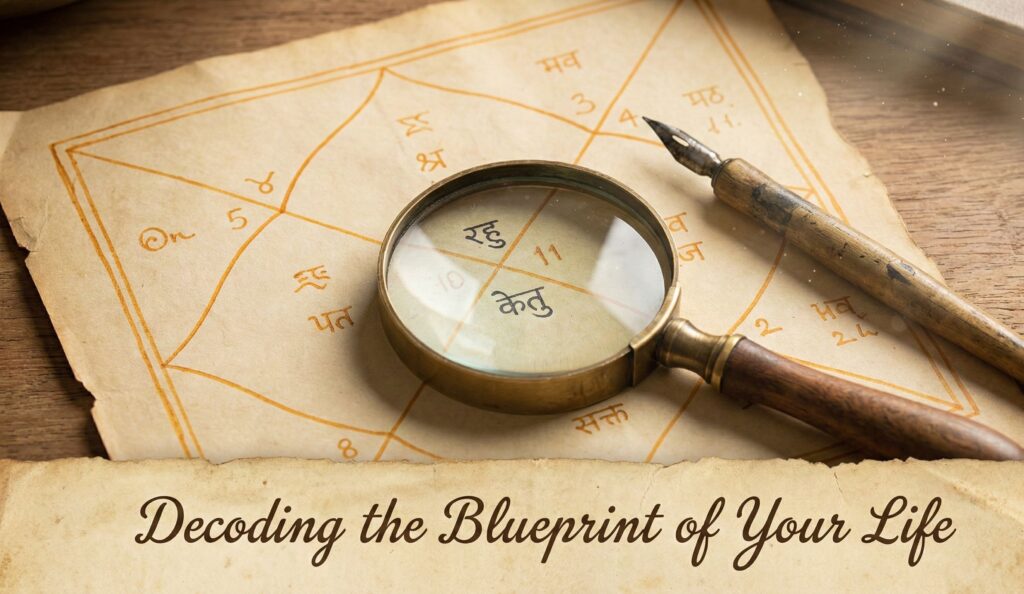
Ye Sirf Ek Kagaz Nahi, Aapki Life Ka “Google Map” Hai

“Kya aapne kabhi socha hai ki kuch log bina zyada mehnat kiye safalta ki seediyan chadhte jate hain, jabki kuch log din-raat mehnat karke bhi wahi reh jate hain?

Kya ye sirf ‘Kismat’ hai? Ya iske peeche koi aur science hai?

Namaskar, main hoon [Aapka Naam/BhavKund Team], aur aaj hum baat karenge us cheez ki jise hum aksar ‘purane zamane ki baat’ samajh kar ignore kar dete hain—Janam Kundli.

Agar main seedhe shabdon mein kahun, toh Janam Kundli aasmaan ka ek ‘Screenshot’ hai.

Jiji haan, bilkul sahi padha aapne. Jis waqt aur jis jagah aapne is duniya mein pehli baar aankhein kholi thi, us exact second par aasmaan mein Grah (Planets) aur Nakshatra kahan the—us tasveer ko hi Janam Kundli kehte hain.

Lekin ye zaroori kyun hai?

Ise aise samjhiye—Agar life ek anjaan shehar hai, toh Kundli aapka ‘GPS Navigation’ hai. Ye aapko future nahi badal kar degi, lekin ye zaroori bata degi ki aage ‘Traffic’ (Mushkilein) kahan milega aur ‘Highway’ (Success) kahan hai, taaki aap apni gaadi sahi gear mein chala sakein.

Is article mein hum koi bhari-bharkam Sanskrit ke shlok nahi padhenge. Hum bilkul simple bhasha mein samjhenge ki 12 Khane (Houses) kya hote hain aur aap apni kundli dekhkar apne baare mein kya jaan sakte hain.”

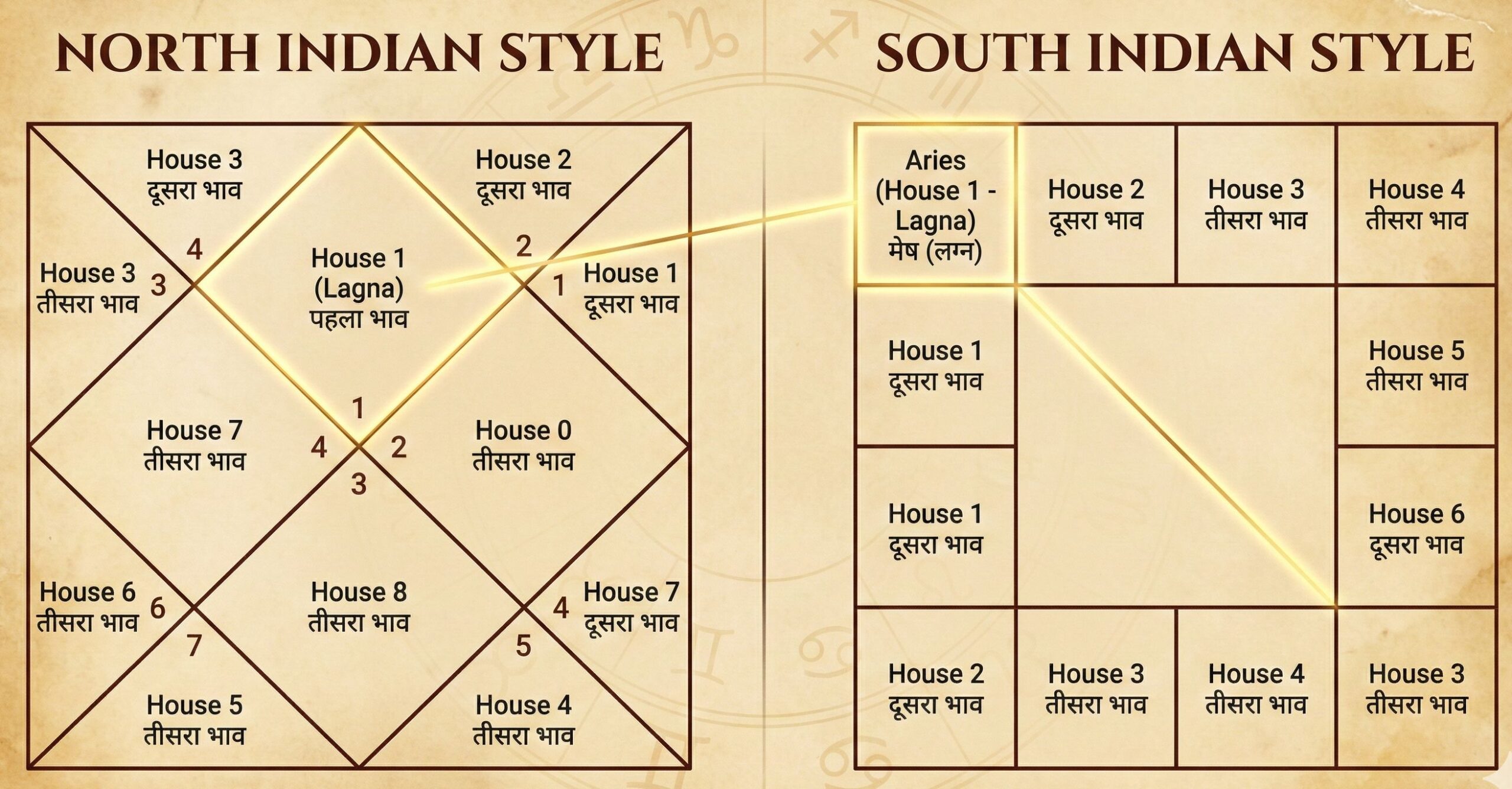
Kundli ke ye 12 ghar wahi 12 Departments hain jo aapki life ko chalate hain. Har department ka kaam alag hai.

Chaliye dekhte hain kaunsa ghar kaunsa department sambhalta hai:

Pahla Ghar (The Reception/Face): Ye aap khud hain. Aap dikhte kaise hain, aapka nature kaisa hai, duniya aapko pehli nazar mein kaise dekhti hai—ye sab yahan tay hota hai.

Dusra Ghar (The Bank Locker): Ye aapka Finance Department hai. Aapke paas kitna paisa judega (savings), aapki family aur aapki vaani (speech) kaisi hogi.

Chautha Ghar (The Comfort Zone): Ye aapka ‘Home Department’ hai. Aapki maa, aapka ghar, gadi aur mann ki shanti yahan dekhi jati hai.

Saatvan Ghar (The Partnership Cabin): Ye bahut zaroori hai! Ye ‘Relationship Department’ hai. Aapka life partner (pati/patni) kaisa hoga, aur business partners kaise milenge.

Dasvan Ghar (The CEO’s Office): Ye aapka ‘Career Department’ hai. Aap job karenge ya business? Aapko samaj mein kitni izzat milegi? Ye sabse active department hota hai.

(Baaki gharon—jaise 6th (Rojgar/Bimari), 8th (Achanak ghatnayein), 12th (Kharcha/Videsh)—ko bhi grah apne hisab se control karte hain.)

Seedhi Baat: Grah (Planets) wo ‘Officers’ hain jo in departments mein baithte hain. Agar ‘Finance Department’ (2nd House) mein koi acha officer (jaise Guru/Jupiter) baitha hai, toh paisa badhega. Agar koi sakht officer (jaise Shani/Saturn) baitha hai, toh paisa dheere-dheere aayega par tikega.”

5 Myths About Tarot Reading.

Life often brings us to difficult paths. Accordingly, whether you are at a career crossroads or navigating relationships, Tarot reading can serve as a gentle, illuminating light.

At BhavKund, we believe that Tarot is not about frightening predictions or giving away your power. Instead, it is a sacred tool for self-reflection—a mirror that helps you see your own intuition more clearly.

What is Tarot Reading?

At its heart, Tarot is a spiritual resource that encourages us to look inward. Think of a Tarot reading as a conversation with your subconscious mind. It is a tool that helps us understand our thoughts and emotions so we can become the best version of ourselves.

Many people believe Tarot is magic, but the true magic lies within you. The cards simply act as a map. They reveal the energies surrounding your life right now, helping you recognize patterns in your behavior, solve problems, and make decisions with greater clarity. It is a bridge between the practical world we live in and the spiritual wisdom we carry inside.

History & Origin of Tarot Cards

The Tarot has a rich and mysterious history. While it has been our oracle for more than six hundred years, it didn’t start as a mystical tool,. Originally, these beautiful decks were used for games in Europe. Over centuries, however, spiritual seekers and mystics began to see the deep archetypal wisdom hidden in the artwork.

The cards we recognize today—like the famous Rider-Waite Smith deck—were created to reflect the human condition. They are a picture book of life’s journey, designed to speak a universal language that crosses cultures and centuries.

How Tarot Reading Works

You might wonder, how can a shuffle of cards provide answers?

Tarot reading works through the powerful connection between intuition, energy, and symbolism. The images on Tarot cards—from the nurturing Empress to the determined Chariot—are ancient symbols designed to stimulate your intuition.

When a reader shuffles the deck, they are not just mixing paper; they are tuning into the “fluidity” of the moment. Tarot is not bound by space and time; it operates on energy. The reader’s role is to interpret these symbols to tell the story of your current situation. However, the cards do not control you. They show you what is already present in your energy field, acting as a mirror to your inner truth.

Types of Tarot Readings

Because life is complex, there are many different ways to consult the cards. Whether you visit a reader in person or book an online tarot reading, the focus can shift based on your needs:

  • Love Tarot: These readings focus on relationships, emotional connections, and matters of the heart. They help navigate feelings and partnership dynamics.
  • Career & Finance: Using the suit of Pentacles (which rules money and achievement), these readings explore work opportunities, investments, and stability.
  • Spiritual Guidance: These readings focus on personal growth, life lessons, and your soul’s path.
  • General Forecasts: Often done as a “Celtic Cross” or a yearly spread to look at the overall themes of your life.

Major Arcana vs. Minor Arcana: Understanding the Deck

A standard Tarot deck consists of 78 cards, divided into two distinct families. Understanding the difference is the first step for any beginner.

The Major Arcana

There are 22 Major Arcana cards, often called the “trump cards”. These represent the big, life-changing events and major spiritual lessons we all face,. They tell the story of “The Fool’s Journey”—a metaphor for our path through life, from innocent beginnings (The Fool) to complete fulfillment (The World),. When these appear in a reading, they signal significant shifts in your destiny.

The Minor Arcana

The remaining 56 cards are the Minor Arcana. These reflect our day-to-day life, such as daily interactions, passing emotions, and practical struggles. They are divided into four suits, much like playing cards:

  • Cups: Emotions, relationships, and love (Water element).
  • Pentacles: Money, career, and home (Earth element).
  • Swords: Thoughts, intellect, and conflict (Air element).
  • Wands: Passion, creativity, and action (Fire element).

Can Tarot Predict the Future?

This is the most common question we hear. The honest answer is balanced. Tarot cards are not a crystal ball that shows a fixed, unchangeable future.

We all have free will. The future is not set in stone; it is fluid. A reading shows you the probable outcome based on your current path, thoughts, and actions. If you don’t like the outcome the cards show, you have the power to change your behavior and make different choices. Tarot empowers you to create your future, rather than just waiting for it to happen.

Benefits of Tarot Reading

Why do millions of people turn to Tarot? It offers profound benefits for modern living:

  • Clarity and Insight: It cuts through mental fog and offers a fresh perspective on difficult problems.
  • Self-Reflection: It forces you to pause and look at your life honestly, increasing self-awareness.
  • Decision Making: By weighing options (like in a “Two Paths” spread), Tarot helps you choose with confidence.
  • Emotional Healing: It validates your feelings and helps you process grief, love, or confusion.

Common Myths & Misconceptions

Let’s clear the air and remove the fear often associated with Tarot.

  • Myth: The Death card means physical death. Truth: The Death card rarely means physical dying. It is a beautiful symbol of transformation, ending one cycle to begin a new, fresh chapter.
  • Myth: You must be gifted a deck to start. Truth: You can absolutely buy your own tarot cards! Choosing a deck that speaks to you visually is the best way to bond with it.
  • Myth: Tarot is evil or scary. Truth: Tarot is a tool for spiritual growth and healing. It depends entirely on the intention you bring to it.

How to Prepare for a Tarot Reading

To get the most out of your session, a little preparation goes a long way:

  1. Set Your Intention: Be mindful of why you are seeking answers. Ensure your energy is calm and open.
  2. Cleanse Your Space: Many people like to use sage, incense, or simple deep breathing to clear the energy before a reading.
  3. Ask Open-Ended Questions: Instead of asking “Will I get married?”, try asking “What do I need to know about my relationship right now?”.
  4. Be Open: Sometimes the cards tell us what we need to hear, not just what we want to hear.

Why Choose Online Tarot Reading?

In our digital age, online tarot reading has become a trusted method for spiritual guidance. It offers comfort and privacy, allowing you to receive guidance from your own safe space. Energy is not limited by physical distance. A skilled reader can connect with your energy just as effectively online, providing you with a written or video record of your reading that you can revisit whenever you need reassurance.


Explore your tarot guidance with clarity and confidence.


1. Love Tarot: Navigating Matters of the Heart

  • Intro: Love is our biggest teacher. How Tarot acts as a mirror for relationships.
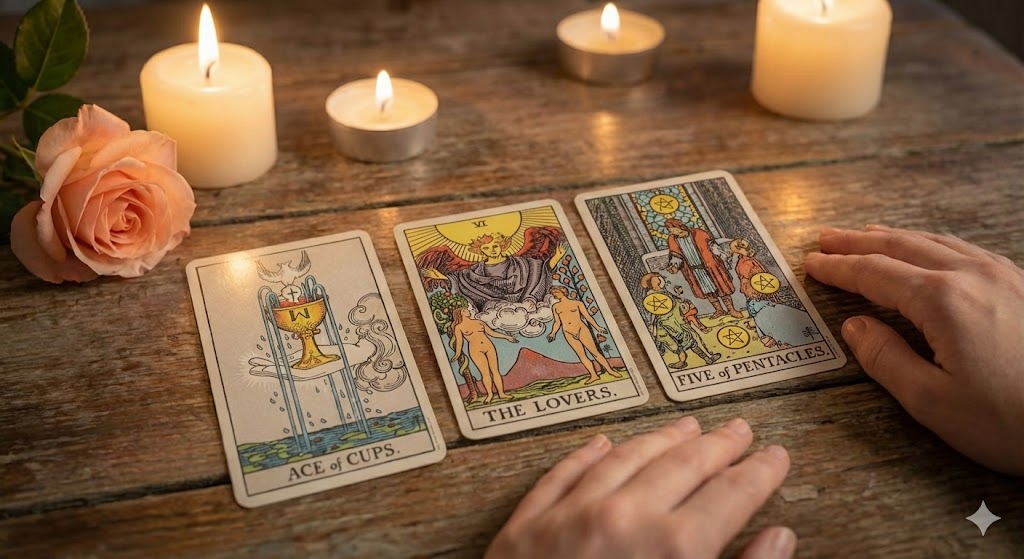
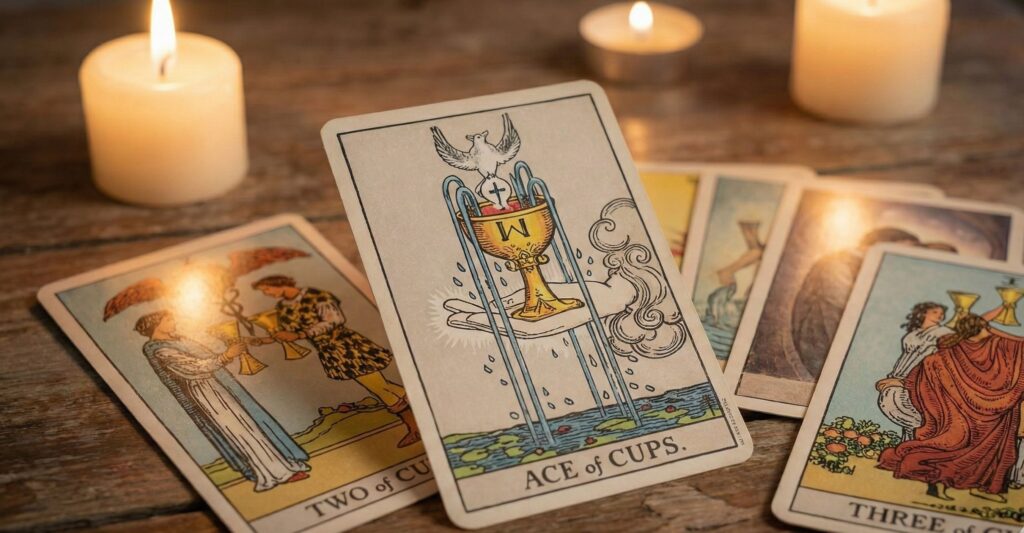
  • The Suit of Cups: Explain how this suit rules emotions. Mention the Ace of Cups (new feelings) or the Two of Cups (partnership).
  • The Lovers Card: Explain that it isn’t just about romance; it’s about making choices from the heart vs. the head.
  • Sample Spreads: Introduce a simple “You & Them” spread (What you feel, What they feel, The challenge).
  • Conclusion: Love Tarot helps you understand connections, not just predict weddings.

2. Yes/No Tarot: Quick Answers for Daily Life

  • Intro: Sometimes we need a simple answer.
  • How it Works: Explain that some cards carry “Yes” energy (like The Sun or Ace of Wands) and others carry “No” energy (like Ten of Swords or Five of Pentacles),.
  • The “Maybe” Cards: Explain that cards like The Moon (illusion/confusion) or Two of Swords (indecision) mean the answer isn’t clear yet,.
  • Disclaimer: Remind users that Yes/No is for simple guidance, not life-altering decisions.

3. Daily Tarot: Your Morning Ritual for Mindfulness

  • Intro: Why pulling one card a day changes your mindset.
  • The Daily Draw: Explain the “Daily Draw” method—shuffling and pulling one card to set the theme for the day.
  • Journaling: Encourage keeping a Tarot Journal. Writing down your daily card helps you learn the meanings and track your intuition over time.
  • Benefits: It grounds you and prepares you for the day’s energy.

Manglik Dosha: Understanding the Myths, The Effects…


In the realm of Indian matchmaking and Vedic Astrology, few terms carry as much weight—or cause as much anxiety—as  Manglik Dosha. Also known widely as Kuja DoshaBhom Dosha, or Angaraka Dosha, this planetary condition is a critical factor when matching Kundalis (horoscopes) for marriage.

But what exactly is it, and does it truly spell doom for a couple? Let us decode the influence of Mars (Mangal) on your life.


What is Manglik Dosha?

According to Vedic Astrology, Manglik Dosha occurs when the fiery planet Mars (Mangal) is positioned in the 1st, 4th, 7th, 8th, or 12th house of a person’s birth chart.

Mars is a planet of energy, aggression, ego, and self-esteem. When it sits in these sensitive houses, it impacts specific aspects of life:

  • 1st House (Lagna/Ascendant): Represents the self and personality.
  • 4th House: Represents domestic happiness, the mother, and emotional comfort.
  • 7th House: The primary house of marriage, partnership, and the spouse.
  • 8th House: Represents longevity, in-laws, and sudden events.
  • 12th House: Represents expenditure, losses, and bedroom pleasures.

If Mars resides in any of these houses, the person is termed a “Manglik.” The belief is that the aggressive energy of Mars can cause friction, disagreements, or deeper problems in marital life if not properly matched.

Not All Mangliks Are the Same

It is important to understand that the intensity of this Dosha varies. It can appear in:

  1. Lagna Kundali (Ascendant Chart)
  2. Chandra Kundali (Moon Chart)
  3. Navamansa Chart (D9 Chart)

If Mars is present in these positions in only one chart, the Dosha is considered “Low” or mild. However, if it repeats across two or more charts (e.g., it is in the 7th house in both the Lagna and Moon charts), the effects are considered stronger, often referred to as “High Manglik” or Purna Manglik.


The Effects of Kuja Dosha on Life and Marriage

The impact of Manglik Dosha differs from person to person. While some may feel it intensely, others may barely notice it, depending on the other planetary alignments. However, traditionally, the following effects are often associated with this placement:

  • Delay in Marriage: One of the most common issues is difficulty in finding a suitable match or facing constant obstacles in finalizing the alliance.
  • Disharmony in Marriage: High volatility, temper issues, and “mismatch thinking” (compatibility issues) between partners can lead to frequent quarrels.
  • Professional Struggles: Apart from marriage, an afflicted Mars can sometimes lead to a late start in one’s career or irregular education.
  • Health and Childbirth: In some cases, it may cause health issues for the spouse or difficulties regarding progeny.
  • Separation: In extreme cases without remedies, it is believed to lead to divorce or separation.

Busting the Myths: Is it Really Dangerous?

There is a lot of fear-mongering surrounding Manglik Dosha. It is vital to separate superstition from astrological logic.

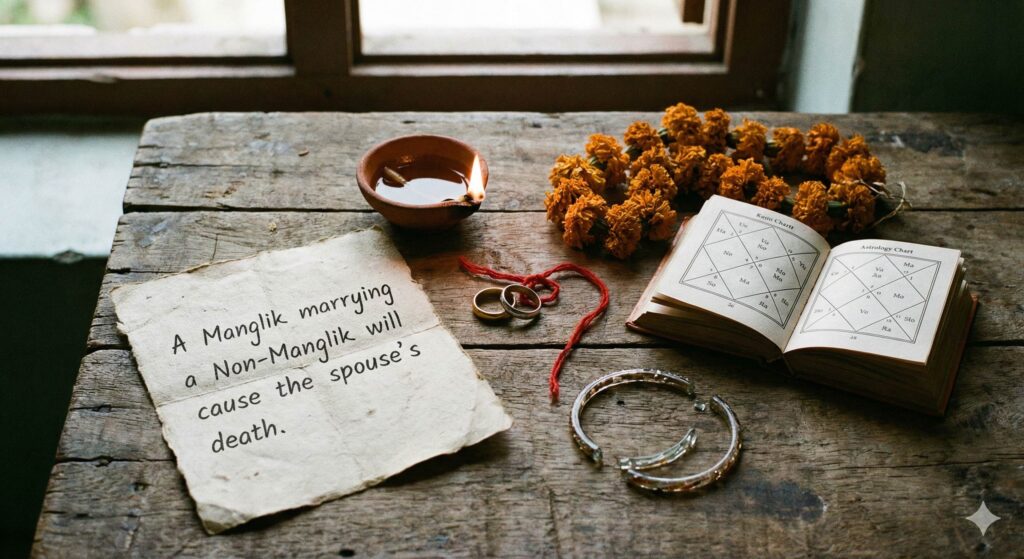
Myth: “A Manglik marrying a Non-Manglik will cause the spouse’s death.”

The Truth: This is the biggest misconception. While the 8th house placement affects longevity, the “death of a spouse” is an extreme and rare prediction that depends on the entire chart, not just one planet. Millions of Mangliks marry Non-Mangliks and live long, happy lives after performing simple Shanti (remedies) or because of other neutralizing factors in their charts.

Myth: “Manglik Dosha leads to divorce.”

The Truth: Mars represents energy. If a Manglik person (high energy) marries another Manglik person, the energies balance out—this is called “Manglik Dosha Cancellation.” Even if married to a non-Manglik, compatibility can be achieved through understanding and remedies.


Conclusion and Remedies

In our Indian culture, we believe that for every problem, the Shastras provide a solution. If you have Kuja Dosha, there is no need to panic.

Manglik Dosha Cancellation (Bhang) occurs naturally in many charts—for example, if Mars is in its own sign (Aries or Scorpio) or exalted (Capricorn), the ill effects are significantly reduced.

However, if you are concerned, there are several Vedic remedies:

  • Kumbh Vivah: A ritual marriage to a pot or an idol of Vishnu/Krishna before the actual wedding.
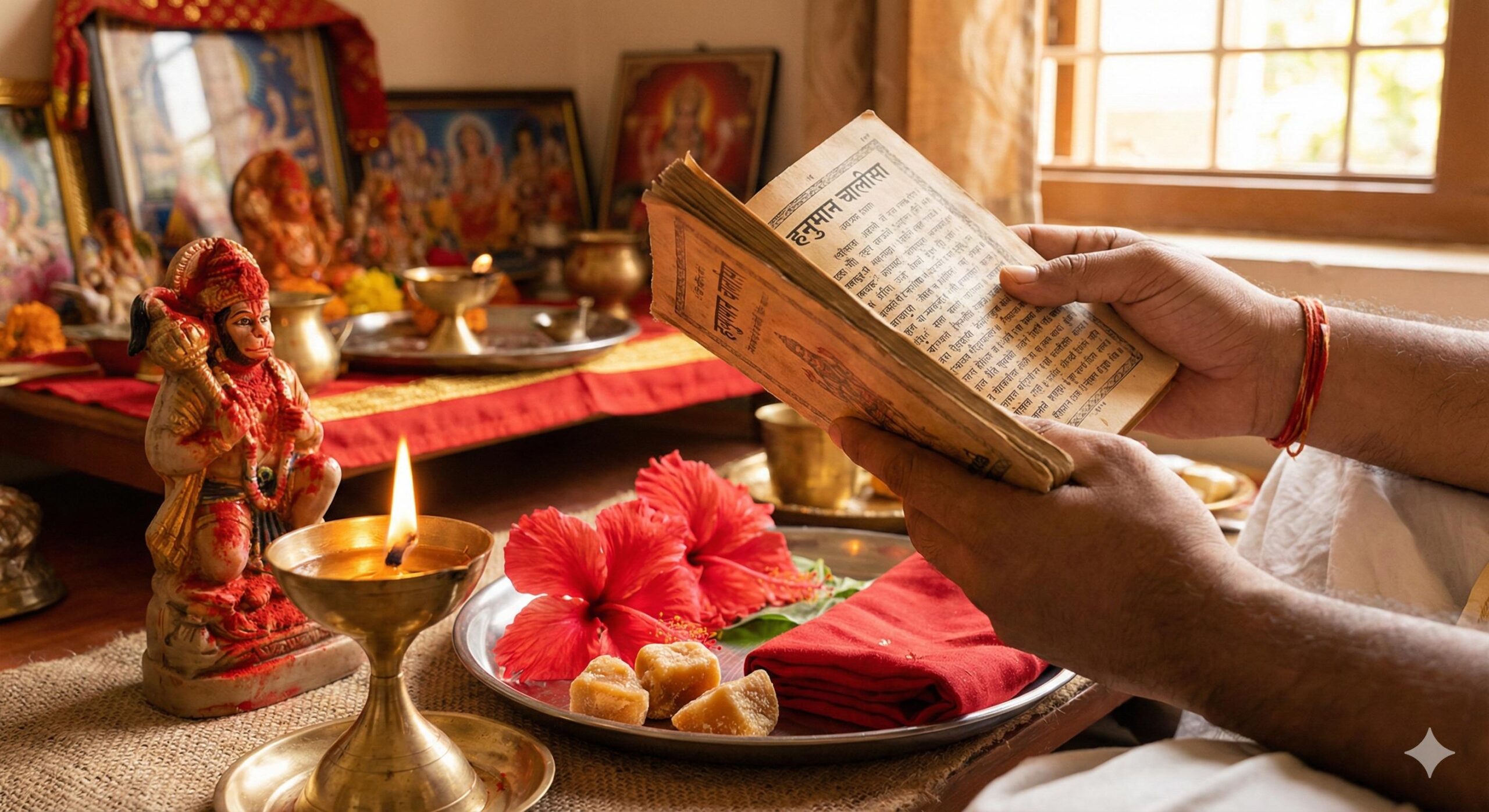
  • Chanting: Reciting the Hanuman Chalisa or Mantras for Mangal Graha.
  • Fasting: Observing fasts on Tuesdays.

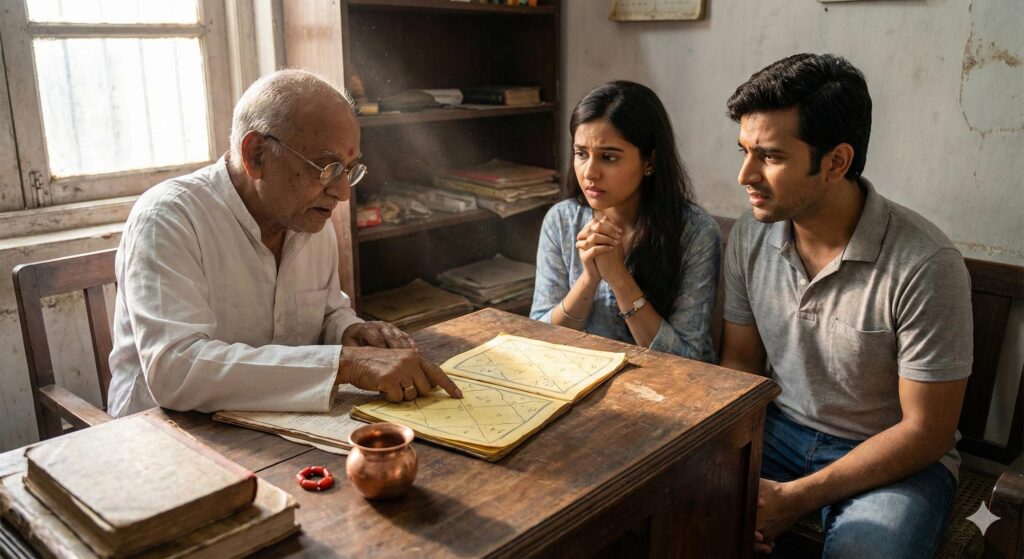
Astrology is a guiding light, not a frightening sentence. If you believe in the influence of the planets, consulting a knowledgeable astrologer to analyze the Navamansa and Bhav charts is always the best step forward.

In the realm of Indian matchmaking and Vedic Astrology, few terms carry as much weight—or cause as much anxiety—as Manglik Dosha. Also known widely as Kuja DoshaBhom Dosha, or Angaraka Dosha, this planetary condition is a critical factor when matching Kundalis (horoscopes) for marriage.

But what exactly is it, and does it truly spell doom for a couple? Let us decode the influence of Mars (Mangal) on your life.

What is Manglik Dosha?

According to Vedic Astrology, Manglik Dosha occurs when the fiery planet Mars (Mangal) is positioned in the 1st, 4th, 7th, 8th, or 12th house of a person’s birth chart.

Mars is a planet of energy, aggression, ego, and self-esteem. When it sits in these sensitive houses, it impacts specific aspects of life:

  • 1st House (Lagna/Ascendant): Represents the self and personality.
  • 4th House: Represents domestic happiness, the mother, and emotional comfort.
  • 7th House: The primary house of marriage, partnership, and the spouse.
  • 8th House: Represents longevity, in-laws, and sudden events.
  • 12th House: Represents expenditure, losses, and bedroom pleasures.

If Mars resides in any of these houses, the person is termed a “Manglik.” The belief is that the aggressive energy of Mars can cause friction, disagreements, or deeper problems in marital life if not properly matched.

Not All Mangliks Are the Same

It is important to understand that the intensity of this Dosha varies. It can appear in:

  1. Lagna Kundali (Ascendant Chart)
  2. Chandra Kundali (Moon Chart)
  3. Navamansa Chart (D9 Chart)

If Mars is present in these positions in only one chart, the Dosha is considered “Low” or mild. However, if it repeats across two or more charts (e.g., it is in the 7th house in both the Lagna and Moon charts), the effects are considered stronger, often referred to as “High Manglik” or Purna Manglik.


The Effects of Kuja Dosha on Life and Marriage

The impact of Manglik Dosha differs from person to person. While some may feel it intensely, others may barely notice it, depending on the other planetary alignments. However, traditionally, the following effects are often associated with this placement:

  • Delay in Marriage: One of the most common issues is difficulty in finding a suitable match or facing constant obstacles in finalizing the alliance.
  • Disharmony in Marriage: High volatility, temper issues, and “mismatch thinking” (compatibility issues) between partners can lead to frequent quarrels.
  • Professional Struggles: Apart from marriage, an afflicted Mars can sometimes lead to a late start in one’s career or irregular education.
  • Health and Childbirth: In some cases, it may cause health issues for the spouse or difficulties regarding progeny.
  • Separation: In extreme cases without remedies, it is believed to lead to divorce or separation.

Busting the Myths: Is it Really Dangerous?

There is a lot of fear-mongering surrounding Manglik Dosha. It is vital to separate superstition from astrological logic.

Myth: “A Manglik marrying a Non-Manglik will cause the spouse’s death.”

The Truth: This is the biggest misconception. While the 8th house placement affects longevity, the “death of a spouse” is an extreme and rare prediction that depends on the entire chart, not just one planet. Millions of Mangliks marry Non-Mangliks and live long, happy lives after performing simple Shanti (remedies) or because of other neutralizing factors in their charts.

Myth: “Manglik Dosha leads to divorce.”

The Truth: Mars represents energy. If a Manglik person (high energy) marries another Manglik person, the energies balance out—this is called “Manglik Dosha Cancellation.” Even if married to a non-Manglik, compatibility can be achieved through understanding and remedies.


Conclusion and Remedies

In our Indian culture, we believe that for every problem, the Shastras provide a solution. If you have Kuja Dosha, there is no need to panic.

Manglik Dosha Cancellation (Bhang) occurs naturally in many charts—for example, if Mars is in its own sign (Aries or Scorpio) or exalted (Capricorn), the ill effects are significantly reduced.

However, if you are concerned, there are several Vedic remedies:

  • Kumbh Vivah: A ritual marriage to a pot or an idol of Vishnu/Krishna before the actual wedding.
  • Chanting: Reciting the Hanuman Chalisa or Mantras for Mangal Graha.
  • Fasting: Observing fasts on Tuesdays.

Astrology is a guiding light, not a frightening sentence. If you believe in the influence of the planets, consulting a knowledgeable astrologer to analyze the Navamansa and Bhav charts is always the best step forward.
.

Mangal dosha

Manglik-Dosha-Powerful-Remedies


Manglik Dosha: Cancellations, Exceptions, and Powerful Remedies

In Vedic Astrology, while the term Manglik Dosha often brings worry to parents and individuals seeking marriage, there is a very important concept known as Manglik Dosha Bhang (Cancellation).

It is said in our Shastras that “Exceptions are always more powerful than the rules.” In many cases, even if Mars is positioned in the 1st, 4th, 7th, 8th, or 12th house, the negative effects are nullified due to the specific placement of other planets or the sign Mars is residing in.

Here is a detailed guide on when Manglik Dosha gets cancelled and the remedies you can perform to bring peace and harmony to your life.


When is Manglik Dosha Cancelled? (Exceptions)

Not every person with Mars in the sensitive houses is truly Manglik. The ill effects of Kuja Dosha are considered cancelled or “neutralized” under the following specific astrological conditions:

1. Mars in its Own or Exalted Signs

The Dosha is automatically cancelled if Mars is placed in its own house or its sign of exaltation. This includes:

  • Aries (Mesha) and Scorpio (Vrishchika): Mars is in its own home.
  • Capricorn (Makara): Mars is exalted (uchcha) here.
  • Friendly Signs: If Mars is sitting in the houses of its friends—Sun (Leo), Moon (Cancer), or Jupiter (Sagittarius/Pisces)—the severity is drastically reduced.

2. Specific Ascendant (Lagna) Rules

The placement of Mars acts differently depending on your rising sign:

  • Gemini and Virgo: If Mars is positioned in the 2nd house, the Dosha gets cancelled.
  • Taurus and Libra: If Mars is positioned in the 12th house, it is considered an exception.
  • Cancer and Capricorn: If Mars is positioned in the 7th house, the negative effects are nullified.
  • Sagittarius and Pisces: If Mars is positioned in the 8th house, the Dosha is cancelled.
  • Aquarius Ascendant: If Mars is placed in either the 4th or 8th house, the Manglik Dosha does not apply.

3. The Fortune of Leo and Cancer

According to certain astrological texts, if Mars is placed in the rashis (signs) of Leo or Cancer, it brings good fortune rather than harm, acting as a significant exception to the rule.


Manglik-Dosha-Vedic-Remedies-Remedies

Vedic Remedies for Manglik Dosha

If your chart does not fall under the exceptions above, or if you simply wish to pacify the fiery energy of Mars for a happy married life, our tradition offers simple yet powerful remedies (Upay).

Here are the most effective ways to please Mangal Graha:

1. Worship of Lord Hanuman

Lord Hanuman is the supreme deity to control the energy of Mars.

  • Hanuman Chalisa: Make it a strict habit to chant the Hanuman Chalisa daily. This is considered the most effective remedy.
  • Sunder Kand: For a period of 40 days, recite the Sunder Kand from the Tulsi Ramcharitmanas. For best results, begin this practice on a Tuesday.
  • Mantra Chanting: Chant the powerful mantra “Om Shreem Hanumate Namah” daily.
  • Temple Visits: Visit a Hanuman temple every Tuesday. Offer Sindoor (vermilion), sweets (Prasad), and light a ghee lamp to seek blessings.

2. Fasting (Vrat)

Fasting is a great way to cleanse the body and mind.

  • Observe a fast on Tuesdays.
  • Tip: It is best to start this fasting routine on the first Tuesday of a new month during Shukla Paksha (the rising/waxing phase of the moon).

3. Gayatri Mantra

Reciting the holy Gayatri Mantra 108 times a day helps in calming the mind and reducing the aggressive tendencies associated with an afflicted Mars.

4. Acts of Charity (Daan)

Donation is a noble way to clear karmic debts.

  • Red Cloth & Iron: Mars represents the color red and the metal iron. To cancel the ill effects, donate red clothes to workers or laborers.
  • Specific Donation: It is highly beneficial to donate specifically to workers who use sharp iron tools (like construction workers or smiths), as they are governed by Mars.

A Final Note

Remember, Astrology is a tool for guidance, not fear. Manglik Dosha is simply an indication of high energy that needs to be channelled correctly. With the right match and the right remedies, a Manglik individual can lead a prosperous and happy married life.


How to remove negative energy from home Vastu,
How to tell partner I am Manglik,
Manglik dosha effects on career growth,
Low Manglik vs High Manglik difference,
Simple Manglik dosha remedies at home,
Kundali matching for modern dating apps,
Manglik dosha cancellation for Aquarius ascendant,
Best gemstones for Manglik dosha relief,
Psychological impact of Manglik dosha fear,
Manglik boy and non Manglik girl marriage.
Kuja Dosha vs Manglik Dosha difference,
Is Manglik dosha valid after age 28,
Astrology apps for detailed Kundali Dosha report,
Marriage problems due to Nadi Dosha,
Manglik dosha and delayed child birth,
Scientifically explaining Manglik dosha to skeptics,

Understanding Vastu Dosh: Corrective Measures and Techniques

Vastu-Pyramids

Analyzing Defects and Their Potential Effects


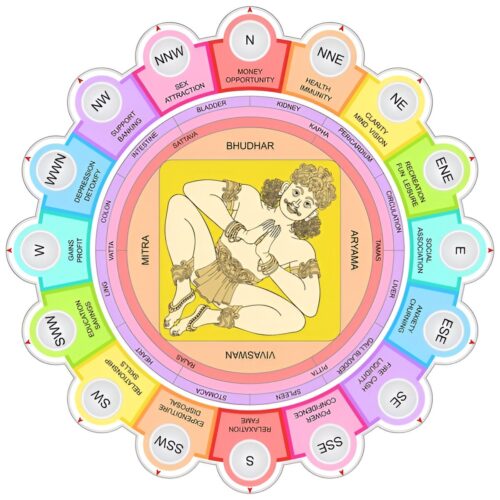
1. North-East Defects
   Defects in this “receiving” corner often manifest as instability. Common effects may include:

  • Family and business disputes.
  • Marital discord or divorce proceedings.
  • Behavioral issues in children.
  • Frequent surgeries, accidents, or chronic health issues.
  • Excessive expenditure and blockage of funds.
  • Legal disputes and rejection of business orders.

vastu shastra


2. South-West Defects
Defects in the “retention” corner often lead to leakage of wealth and stability. Common effects may include:

  • Delays in marriage.
  • Uncontrollable expenses and theft of money.
  • Development of bad habits.
  • Loss of respect and reputation.
  • Strained marital relationships.
  • Professional stagnation (no promotions) or betrayal by employees.
vastu shastra


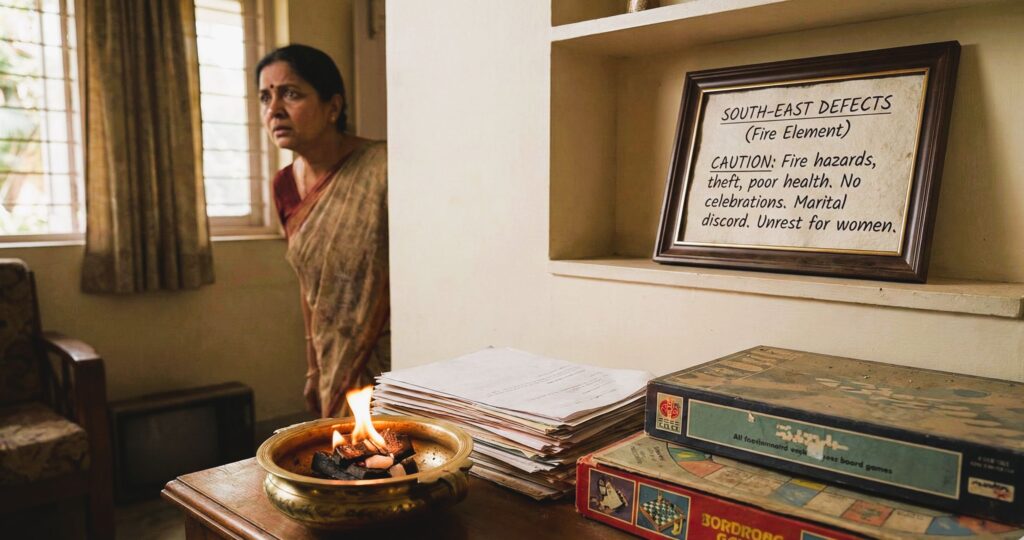
3. South-East Defects
   Associated with the element of Fire, defects here can cause:

  • Fear of theft and fire hazards.
  • Poor health.
  • A lack of celebratory events in the home.
  • Marital conflict.
  • Lack of peace of mind, particularly for the women of the house. 
vastu shastra

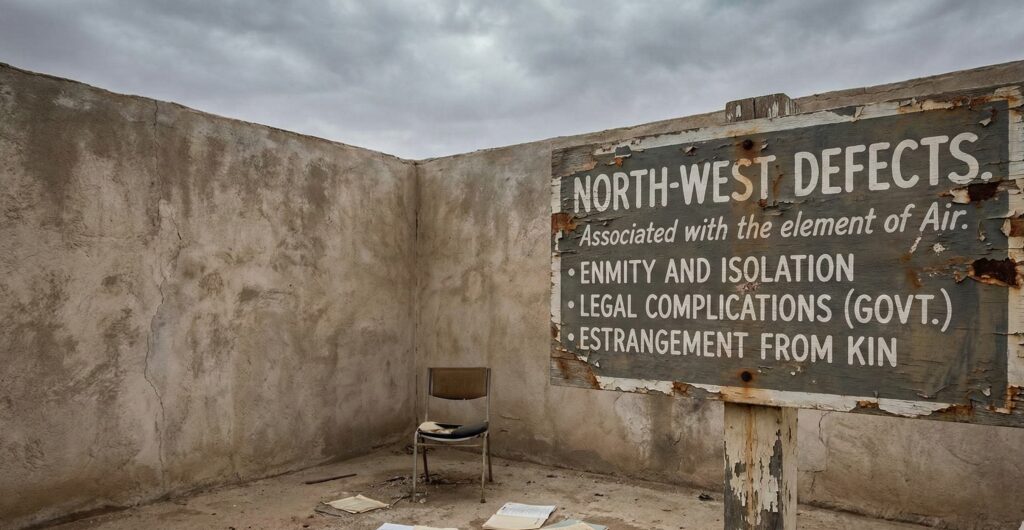
4. North-West Defects
   Associated with the element of Air, defects here can lead to:

  • Enmity and isolation.
  • Legal complications (specifically involving the government).
  • Estrangement from friends and relatives.
vastu shastra

Other Critical Structural Flaws

Beyond the four cardinal corners, the following structural setups are also viewed as serious defects:
  • A bedroom located directly below a kitchen.
  • A house facing a ‘T-Junction’.
  • Obstructions directly in front of the main gate.
  • Cooking while facing the West direction.
  • The cooking stove and water sink placed in the same row and level.
  • Overhead hanging beams on the ceiling.
  • A mirror placed directly in front of the bed.
  • Three doors aligned in a single row.

Remedies for Vastu Defects


vastu shastra

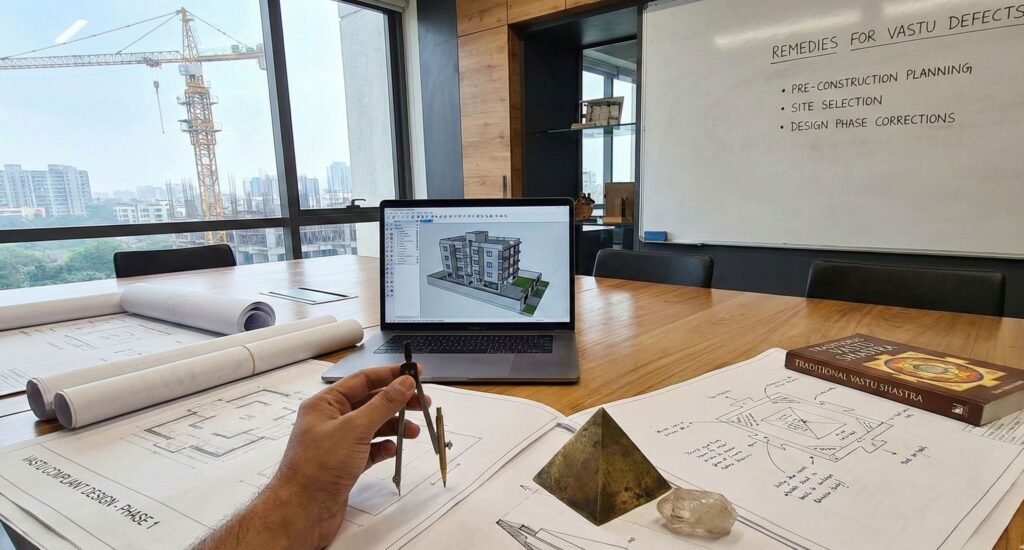
Traditionally, Vastu is a pre-construction science, meaning defects are best avoided during the design phase. However, for existing buildings, demolition is not always feasible.

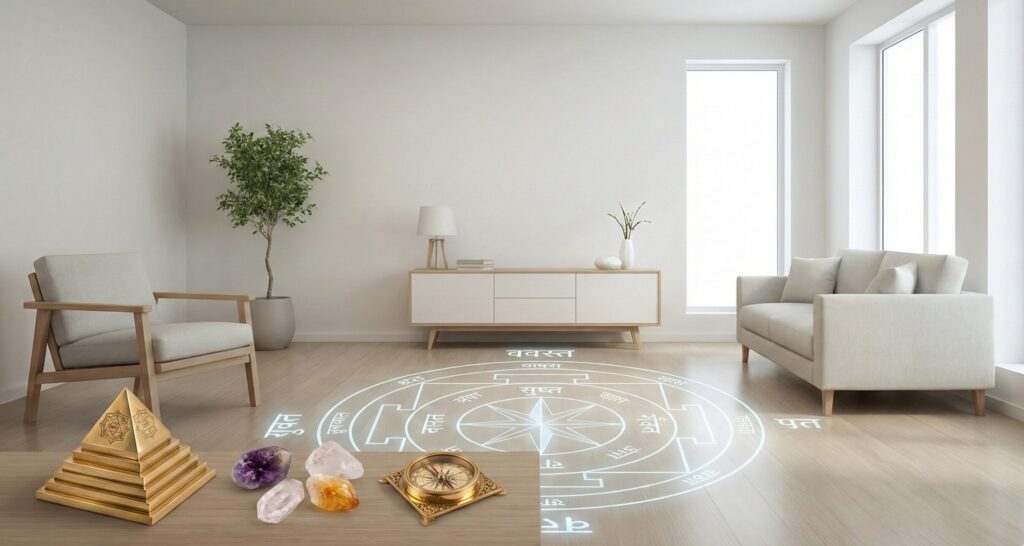
Just as Feng Shui is accepted in China as an art of living, Vastu Shastra allows for the correction of defects by enhancing positive energy without major structural changes. By borrowing from the shared principles of energy flow found in both traditions, we can utilize specific tools to neutralize negative vibrations and improve the quality of life.

The Toolkit for Energy Correction

  • A. Camphor Crystals: Pure camphor is excellent for clearing the atmosphere. It removes negative vibrations and clears stagnant energy.
  • B. Mirrors: When placed correctly, mirrors are powerful tools for counter-balancing negative vibrations caused by spatial defects.
  • C. Sea Salt & Salt Lamps: Sea salt has a natural capability to absorb negative energy from a room.
  • D. Copper Plates & Wires: Copper is considered a superior metal in Vastu and Astrology. Copper wire is often used to correct irregular plot shapes or conceal wrong entries, while copper plates are used extensively in astrological Yantras.
  • E. Wind Chimes: These are excellent sources for enhancing good luck and suppressing bad luck. The material of the chime and the number of rods play a significant role in their functionality.
  • F. Pyramids: The word “Pyramid” translates to “Fire in the Middle.” These are scientifically designed instruments with a holistic approach. Whether made of non-ferrous metal, cardboard, stone, or glass, Pyramids are used to concentrate energy for various corrective purposes.
  • G. Colors: Color therapy works as a strong enhancing tool. The right color scheme can boost Vastu power and build an environment that is positive and inspiring.
  • H. Crystal Balls & Pencils: Crystals help counterbalance negative planetary influences and transform them into positive energy. They are valued for their ability to split light and increase energy levels. However, it is crucial that only properly “charged” crystals are used for these remedies.

Why Vastu is Professionally Important

vastu pooja

Benefit AreaWhy it Matters Professionally
Increased Productivity & FocusAligned workspaces (e.g., facing North or East) are believed to enhance concentration and mental clarity, reducing errors and boosting efficiency.
Improved Health & Well-beingDesigns prioritizing natural light, fresh air, and proper placement of utility areas (like washrooms) help reduce stress and anxiety, contributing to better overall physical and mental health for occupants.
Enhanced Financial StabilitySpecific placements for cash boxes, master cabins, and entrance gates are thought to attract and retain wealth and create an environment favorable for business growth and decision-making.
Harmonious RelationshipsIn corporate settings, Vastu-compliant layouts can foster better communication, cooperation, and reduced conflict among team members and management.
Positive EnvironmentThe science creates an aesthetically pleasing and energetically balanced environment, often resulting in a stronger sense of calm, peace, and overall satisfaction for everyone working or residing there.

Terms & Conditions

Last Updated: (01 Jan 2026)

Welcome to astro.bhavkund.com. By accessing or using our website, services, and software (collectively, the “Service”), you agree to be bound by these Terms and Conditions (“Terms”). If you disagree with any part of the terms, you may not access the Service.

1. General Disclaimer (For Entertainment Purposes Only)

IMPORTANT: The astrology, numerology, horoscopes, and related content provided on Astro.bhavkund .com/BhavKund.com are for entertainment and self-discovery purposes only.

  • Not Professional Advice: The information provided does not constitute medical, legal, financial, or psychological advice. You should not rely on these predictions to make significant life decisions.
  • Consult Professionals: For any health, mental health, legal, or financial concerns, please consult a licensed professional. BhavKund is not responsible for any actions you take based on the content of this website.

2. Accuracy of Predictions (No Guarantee)

Astrology is an interpretive art, not an exact science. While we strive to provide accurate calculations based on Vedic principles and algorithms:

  • We do not guarantee 100% accuracy, reliability, or completeness of any horoscope, prediction, or calculation.
  • We make no promises that the use of our software or reading our content will bring specific results (e.g., marriage, wealth, or success).

3. User Eligibility

By using BhavKund.com, you represent and warrant that you are at least 18 years of age. If you are under 18, you may only use the Service with the involvement and consent of a parent or guardian.

4. Limitation of Liability

To the fullest extent permitted by applicable law, astro.bhavkund.com/BhavKund.com, its owners, affiliates, and partners shall not be liable for any:

  • Indirect, incidental, special, consequential, or punitive damages.
  • Loss of profits, data, use, goodwill, or other intangible losses.
  • Emotional or Mental Distress: We are not liable for any emotional distress or personal dissatisfaction caused by a prediction or reading.
  • Service Interruptions/Data Security: While we use commercially reasonable security measures (such as encryption and secure servers) to protect your data, no method of transmission over the Internet is 100% secure. We cannot guarantee absolute security and shall not be held liable for any unauthorized access, hacking, or data breaches beyond our reasonable control.

5. Third-Party Links and Ads (AdSense & Affiliates)

Our Service may contain links to third-party websites or services (including Google AdSense ads) that are not owned or controlled by BhavKund.

  • BhavKund has no control over, and assumes no responsibility for, the content, privacy policies, or practices of any third-party websites.
  • You acknowledge and agree that BhavKund shall not be responsible or liable, directly or indirectly, for any damage or loss caused by or in connection with the use of any such content, goods, or services available on or through any such websites.

6. Intellectual Property

The Service and its original content (including the “Astro.bhavkund, Bhavkund ” name, logo, software code, and articles) are and will remain the exclusive property of BhavKund and its licensors. You may not copy, distribute, or create derivative works from our content without our explicit written permission.

7. User Conduct

You agree not to:

  • Use the website in any way that violates any applicable national or international law.
  • Attempt to decipher, decompile, disassemble, or reverse engineer any of the software used to provide the Service.
  • Engage in any conduct that restricts or inhibits anyone’s use or enjoyment of the Service.

8. Changes to These Terms

We reserve the right, at our sole discretion, to modify or replace these Terms at any time. By continuing to access or use our Service after those revisions become effective, you agree to be bound by the revised terms.

9. Contact Us

If you have any questions about these Terms, please contact us at:

  • Email: info@bhavkund.com