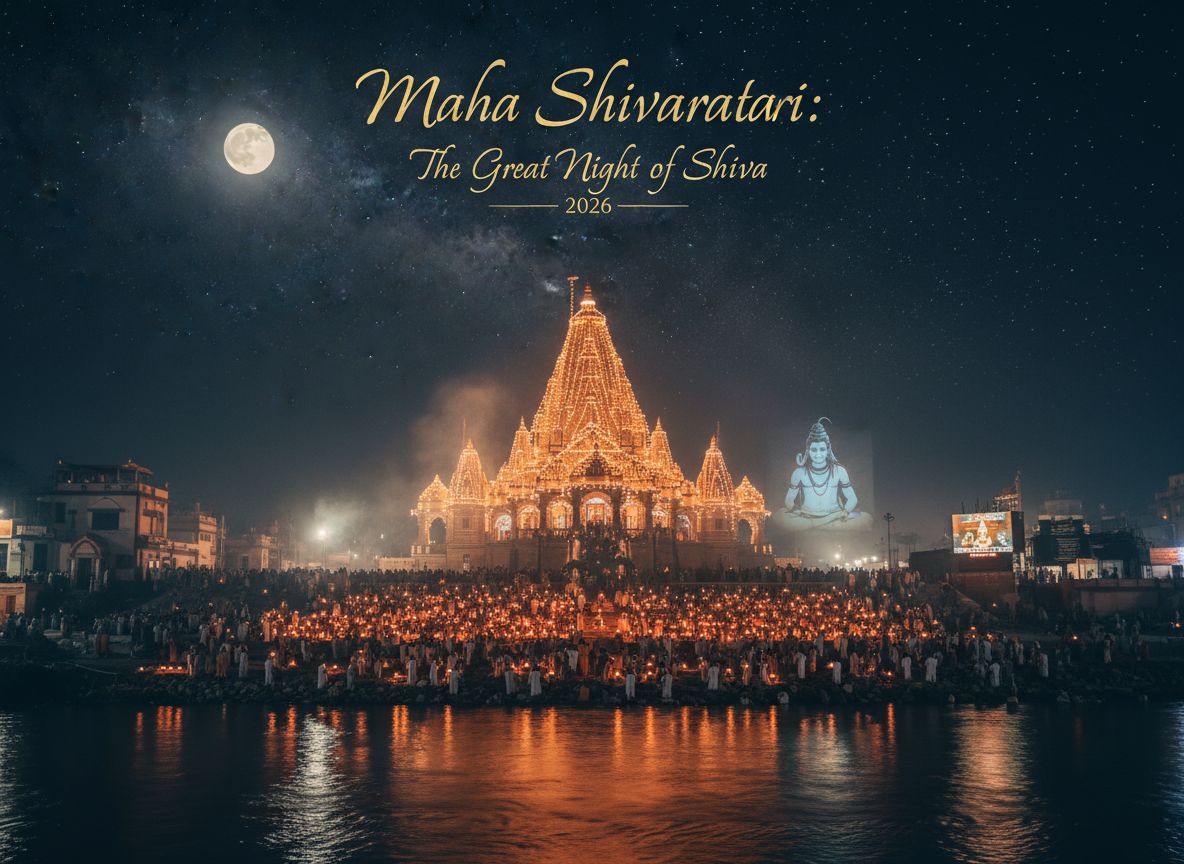
One of the most significant spiritual events of 2026, Maha Shivaratri, falls on February 15, Sunday. Occurring just before the Solar Eclipse, this night carries immense power for spiritual transformation and the removal of deep-seated karmic obstacles. For devotees, the night is divided into four Prahars, each offering specific blessings.
The Nishita Kaal, the most auspicious midnight hour for the main puja, is observed between 12:09 AM and 01:01 AM on the early morning of February 16. T
his is the time when Lord Shiva is believed to have manifested as the infinite pillar of light. Devotees are encouraged to chant “Om Namah Shivaya” or the “Mahamrityunjaya Mantra” to align their internal energy with the cosmic stillness of Mahadev.
The Sound of Liberation: Mahamrityunjaya Mantra
“|| ॐ त्र्यम्बकं यजामहे सुगन्धिं पुष्टिवर्धनम्। उर्वारुकमिव बन्धनान्मृत्योर्मुक्षीय मामृतात्॥”
“Om Tryambakam Yajamahe Sugandhim Pushti-Vardhanam Urvarukamiva Bandhanan Mrityor Mukshiya Maamritat”
Meaning: We worship the Three-Eyed One (Shiva), who is fragrant and nourishes all beings. Just as a ripe cucumber is released from its bond to the vine, may he liberate us from death for the sake of immortality.
| Prahar (Night Vigil) | First Prahar |
| Time (IST) | 06:11 PM – 09:23 PM |
| Spiritual Significance and Rituals | Abhishek with pure water and milk; mental purification |
The First Prahar: Awakening and Purity
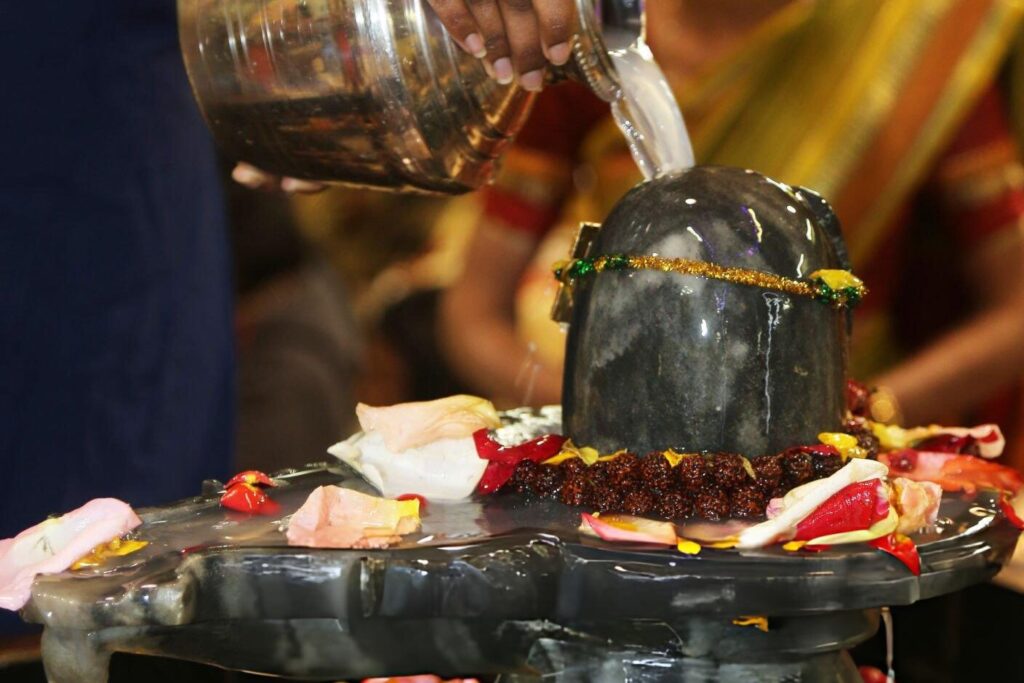
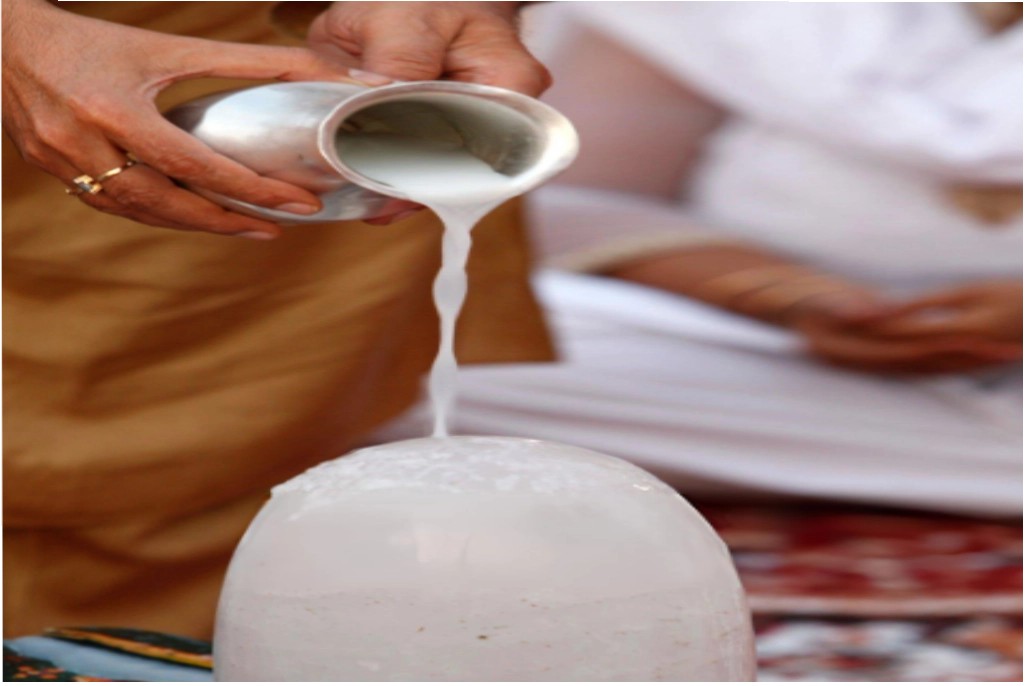
The First Prahar (06:11 PM – 09:23 PM) marks the sacred commencement of the night. Dedicated to the Ishan aspect of Shiva, it symbolizes Srishti (Creation). This phase focuses on the ‘Manas’ (mind)—cleansing the intellect and surrendering one’s ego as the night-long vigil begins.
Step-by-Step Abhishek
1.Prakshalana: Wash the Shiva Lingam with clean water mixed with Gangajal.
2.Dugdha Abhishek: Pour raw (unboiled) cow’s milk slowly over the Lingam.
3.Shuddhodaka: Rinse again with fresh water.
4.Vastra: Offer a clean piece of cloth or sacred thread (Janeu).
5.Gandha: Apply sandalwood paste (Chandan) in three horizontal lines (Tripundra).
The Cooling of Neelkanth
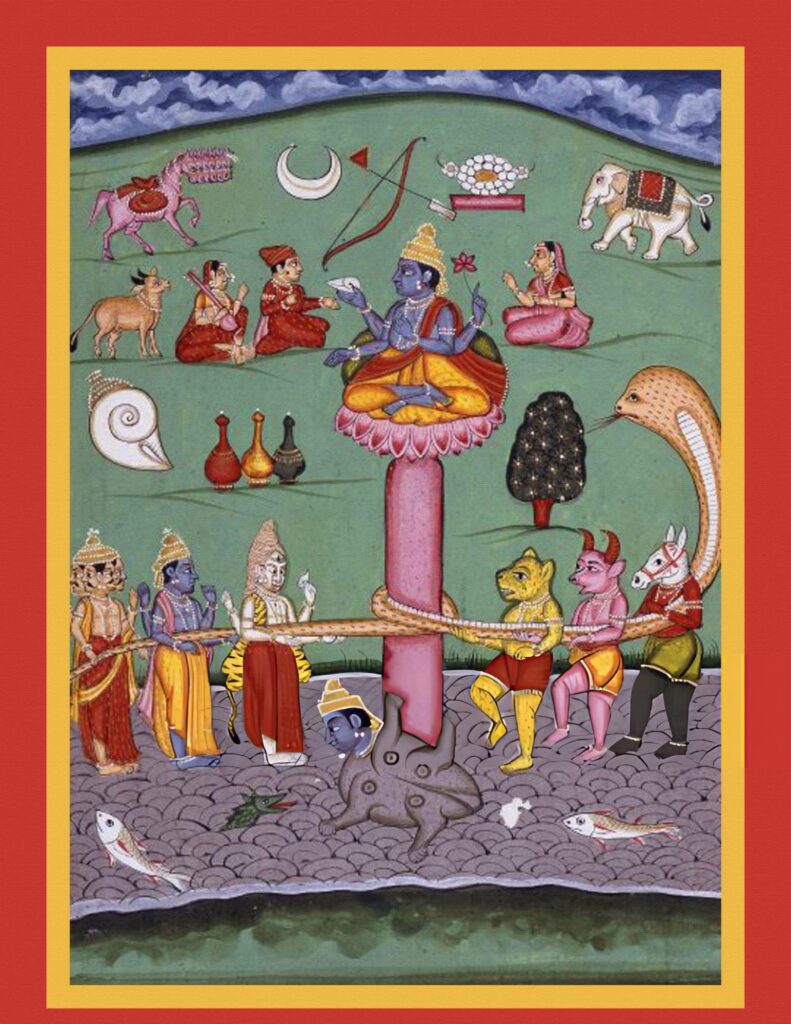
The offering of milk is deeply tied to the legend of Samudra Manthan (The Churning of the Ocean). When Shiva drank the lethal Halahala poison to save the universe, his throat burned with intense heat.Devotees offer milk and water to soothe the ‘Blue-Throated One’. On an internal level, this represents the washing away of mental impurities—anger, greed, and lust—leaving the mind (Manas) as pure and white as the milk itself. By cooling the deity, we aim to cool the turbulence of our own thoughts as the night vigil begins.
| Prahar (Night Vigil) | Second Prahar |
| Time (IST) | 09:23 PM – 12:35 AM |
| Spiritual Significance and Rituals | Abhishek with curd; stability and focus. |
The Second Prahar: Stability & Preservation
The Second Prahar (09:23 PM – 12:35 AM) marks the transition into the depth of the night. Dedicated to the Aghora aspect of Shiva and the energy of Sthiti (Preservation), this phase focuses on the Chitta (subconscious mind)—the storehouse of memory and latent impressions. Rituals performed now aim to stabilize the mind and invite prosperity and inner strength.
The Path of Preservation
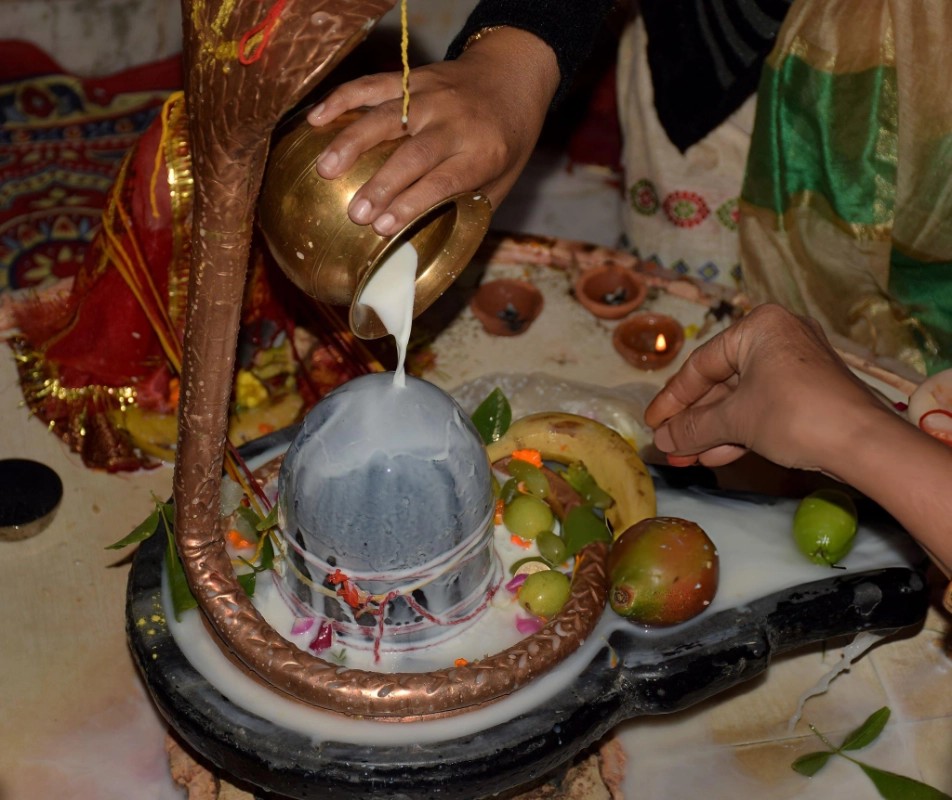
During this segment, the intensity of devotion peaks. The central act is the Curd Abhishek, where thick, cooling yogurt is offered to the Lord.
•Primary Mantra: Om Haum Aghoraya Namah (ॐ हौं अघोराय नमः)
•Focus: As the curd is poured, the devotee seeks to process and stabilize the fluctuations of the subconscious mind.
•Mudra: The Shiva Linga Mudra is often used here to ground spiritual energy and foster inner stability.Step-by-Step Procedure
1.Prakshalana: Clean the Lingam with water mixed with Gangajal to remove previous offerings.
2.Dahi Abhishek: Pour fresh, raw curd slowly over the Lingam while chanting the Aghora mantra.
3.Rinse: Bathe the Lingam again with clean water mixed with sandalwood powder.
4.Deep Daan: Lighting a ghee lamp with five wicks is highly auspicious during this dark phase of the night.
| Prahar (Night Vigil) | Third Prahar |
| Time (IST) | 12:35 AM – 03:47 AM |
| Spiritual Significance and Rituals | Abhishek with ghee; spiritual elevation and enlightenment. |
The Third Prahar: Peak of Enlightenment
The Third Prahar (12:35 AM – 03:47 AM) is the most auspicious phase of the night. Dedicated to the Vamadeva aspect of Shiva and the energy of Laya (Dissolution), this phase focuses on the Buddhi (higher intellect). As the ‘infinite pillar of light’ manifests, rituals aim for spiritual elevation, enlightenment, and the removal of deep karmic burdens.
The Path to Enlightenment
The Third Prahar marks the peak of meditation. The central ritual is
The Ghee Abhishek Process
where pure clarified butter is poured in a slow, meditative stream to symbolize the purification of the soul’s essence.
•Primary Mantra: Om Haum Vamadevaya Namah (ॐ हौं ईशानाय नमः)
•Focus: Direct your awareness to the space between the eyebrows (Third Eye), visualizing the dissolution of ego.
•Mudra: The Dhyana Mudra is performed during this segment to maintain inner stillness and receptivity to divine grace.The Ghee Abhishek Process
1.Prakshalana: Clear all previous offerings and cleanse the Lingam with water mixed with Gangajal.
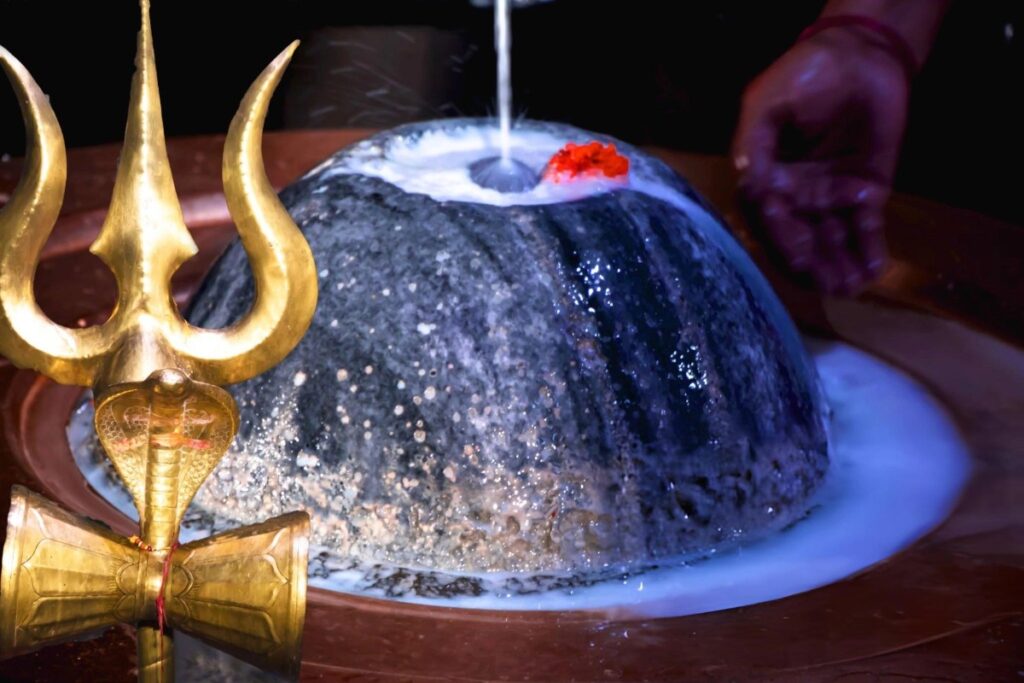
2.Ghrita Abhishek: Pour pure, liquid cow ghee while chanting the Vamadeva mantra.
3.Adornment: Offer white flowers and apply Vibhuti (sacred ash) liberally. This phase often features the most elaborate ‘Shringar’.
4.Deep Daan: Lighting a lamp with camphor (Kapur) is essential to signify the burning of ignorance and the light of wisdom.
| Prahar (Night Vigil) | Fourth Prahar |
| Time (IST) | 03:47 AM – 06:59 AM |
| Spiritual Significance and Rituals | Abhishek with honey; prosperity and divine grace. |
The Fourth Prahar: Grace & Liberation
The Fourth Prahar (03:47 AM – 06:59 AM) is the final phase of the night vigil, coinciding with the sacred Brahma Muhurta. Dedicated to the Sadyojata aspect of Shiva and the energy of Anugraha (Grace), this phase represents the attainment of spiritual knowledge and liberation. As the night ends, the focus shifts to surrendering the Ahamkara (ego) to receive the divine blessings of Mahadev.
The Final Hour of the Vigil
The Path of Grace
The final puja is a joyful and grateful conclusion to the night’s penance. The central ritual is the Honey Abhishek, followed by the final morning prayer and the breaking of the fast.
•Primary Mantra: Om Haum Sadyojataya Namah (ॐ हौं सद्योजाताय नमः)
•Final Chant: Om Namah Shivaya (recited with gratitude for the strength to complete the vigil).
•Morning Ritual: Conclude with the Shiva Aarti and the Kshama Prarthana (prayer for forgiveness) for any errors in the rituals.
Step-by-Step Conclusion
1.Honey Abhishek: Pour fresh honey in a slow stream over the Lingam while chanting the Sadyojata mantra.
2.Sugar Offering: Offer sugar or sugarcane juice to represent the sweetness of divine grace.
3.Final Bath: Cleanse the Lingam one last time with pure water and Gangajal.
4.Akshat & Water: Offer unbroken rice grains (Akshat) and water as a final mark of respect.
5.Sunrise Prayer: Welcome the sun with the Surya Namaskar and perform the final Arati.